


What it does
Unlike a traditional IVR, Dialogue is not a rigid prerecorded prompt. Pearl Voice understands the intent of the step, adapts its wording in real time to what the caller says, and can follow the most relevant configured transition based on the conversation.When to use it
Use Dialogue whenever Pearl needs to:How to configure
1
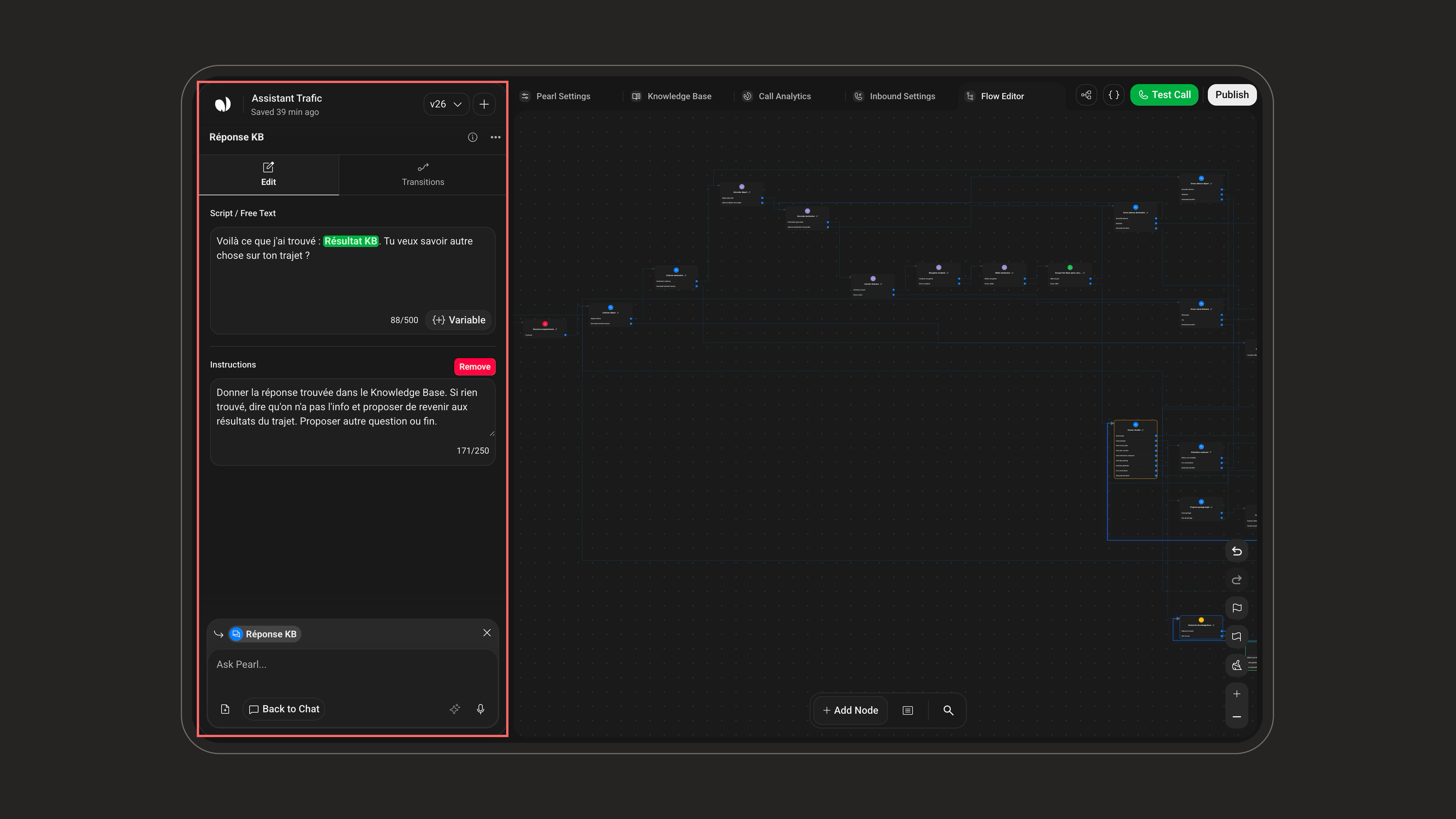
Write the script
In Script / Free Text, enter what Pearl should say or ask. Maximum 500 characters. Supports all available variables.
2
Add instructions (optional)
Use Instructions to guide tone, context, exceptions, pronunciation, required details, or how closely Pearl should follow the script.
Transitions
Each Dialogue node includes a default Continue path. You can also add conditional transitions to direct the caller to another Dialogue node, an action node, or an End Call node. Each conditional transition includes:Example: routing on the caller's answer
Pearl asks whether the caller wants to book an appointment. Based on the answer, she can move to a Booking node, send an SMS, transfer the call, or continue to another part of the conversation.