

Setting Up Inbound Calls
Once you have created a Pearl, you can enable it to receive inbound calls. Inbound settings are configured inside your Pearl, under Inbound Settings, giving callers a dynamic and responsive experience driven by your conversational flow.What are inbound calls?Inbound calls let your Pearl handle incoming calls, engaging with callers immediately and effectively using the conversational flow you defined.
Attach a Phone Number
To receive calls, your Pearl needs a phone number. Numbers are purchased and connected from Settings → Phone Numbers, not from the Inbound Settings screen. Start by clicking your profile card at the bottom-left corner of the sidebar, then open Settings.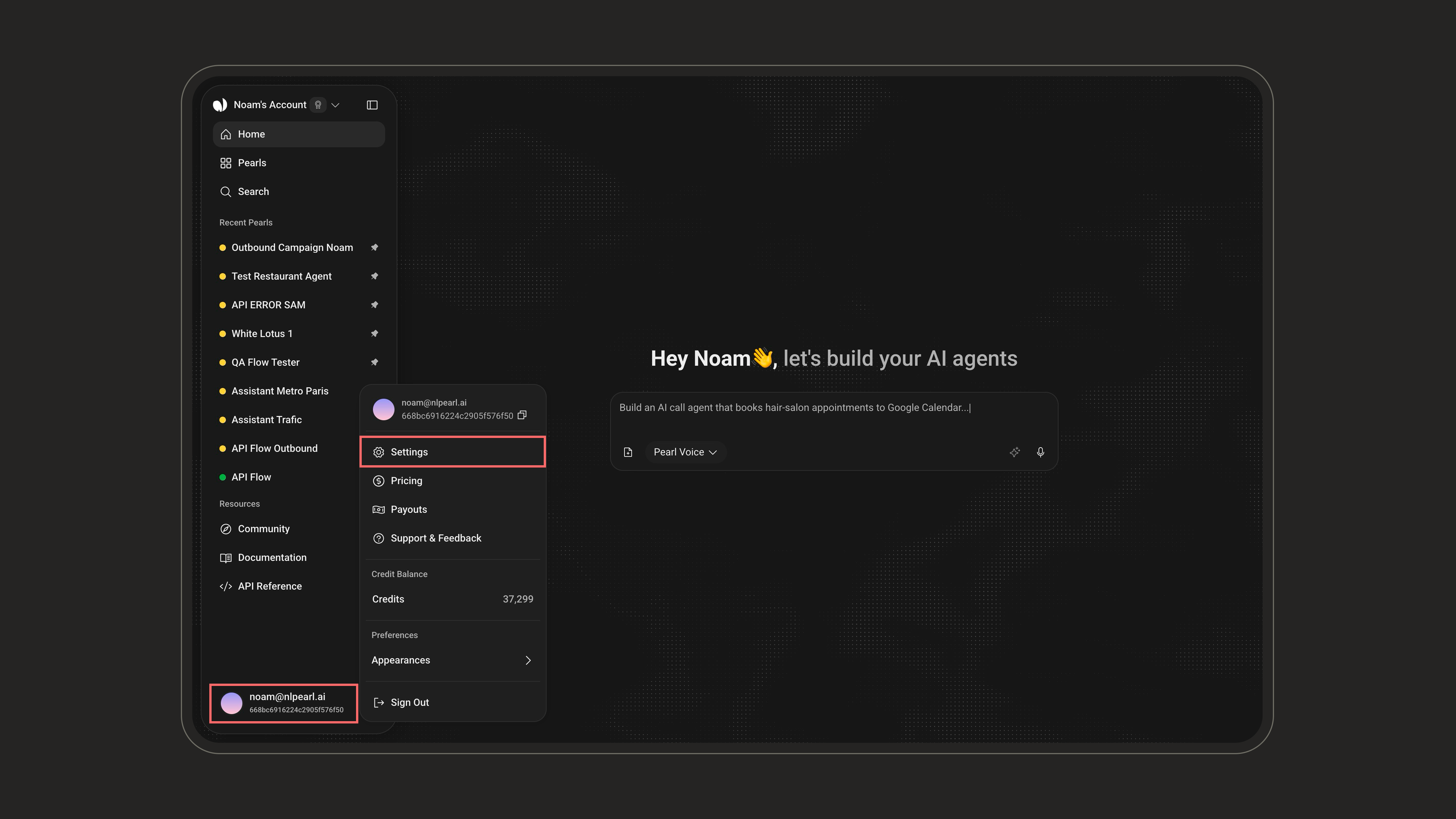
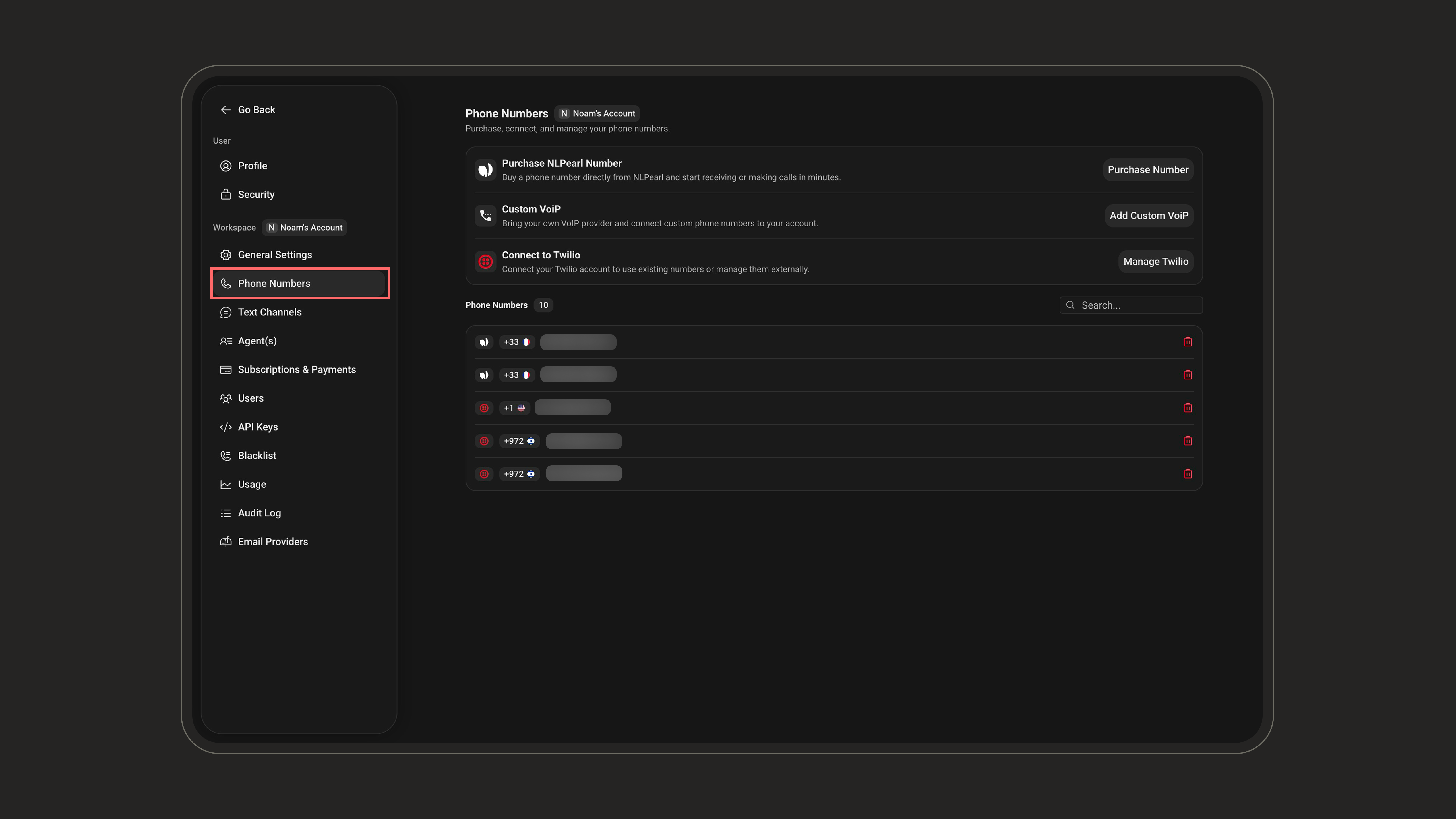


For more details, visit the NLPearl Phone Numbers page.

Visit Twilio Integration for details on how to import and manage your Twilio phone numbers.


To learn more about integrating your own VoIP service, check out Custom VoIP Integration.
Inbound Settings
Configure how your Pearl answers incoming calls from the Inbound Settings tab of your Pearl, in the PearlVibe flow editor.Recording Options
Record the conversation (on/off). When enabled, the call audio is saved and available afterwards from your call logs for quality reviews, training, and analytics. When disabled, no audio is captured or stored.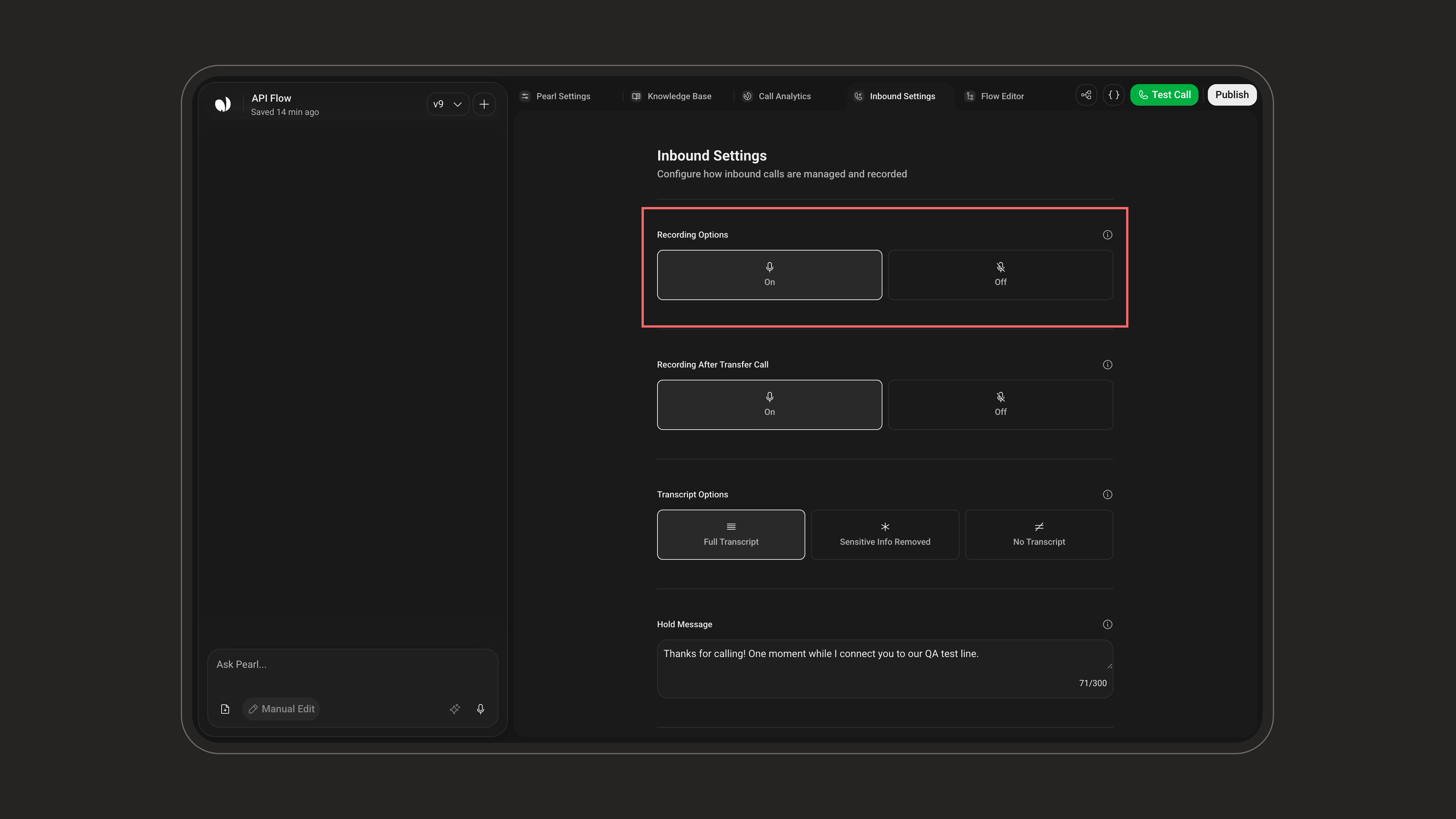
Recording After Transfer Call
If enabled, the call keeps recording after Pearl transfers it and leaves the line, so you capture the full conversation with the human agent. Turn it off if you don’t want to record the person or third party the call is transferred to.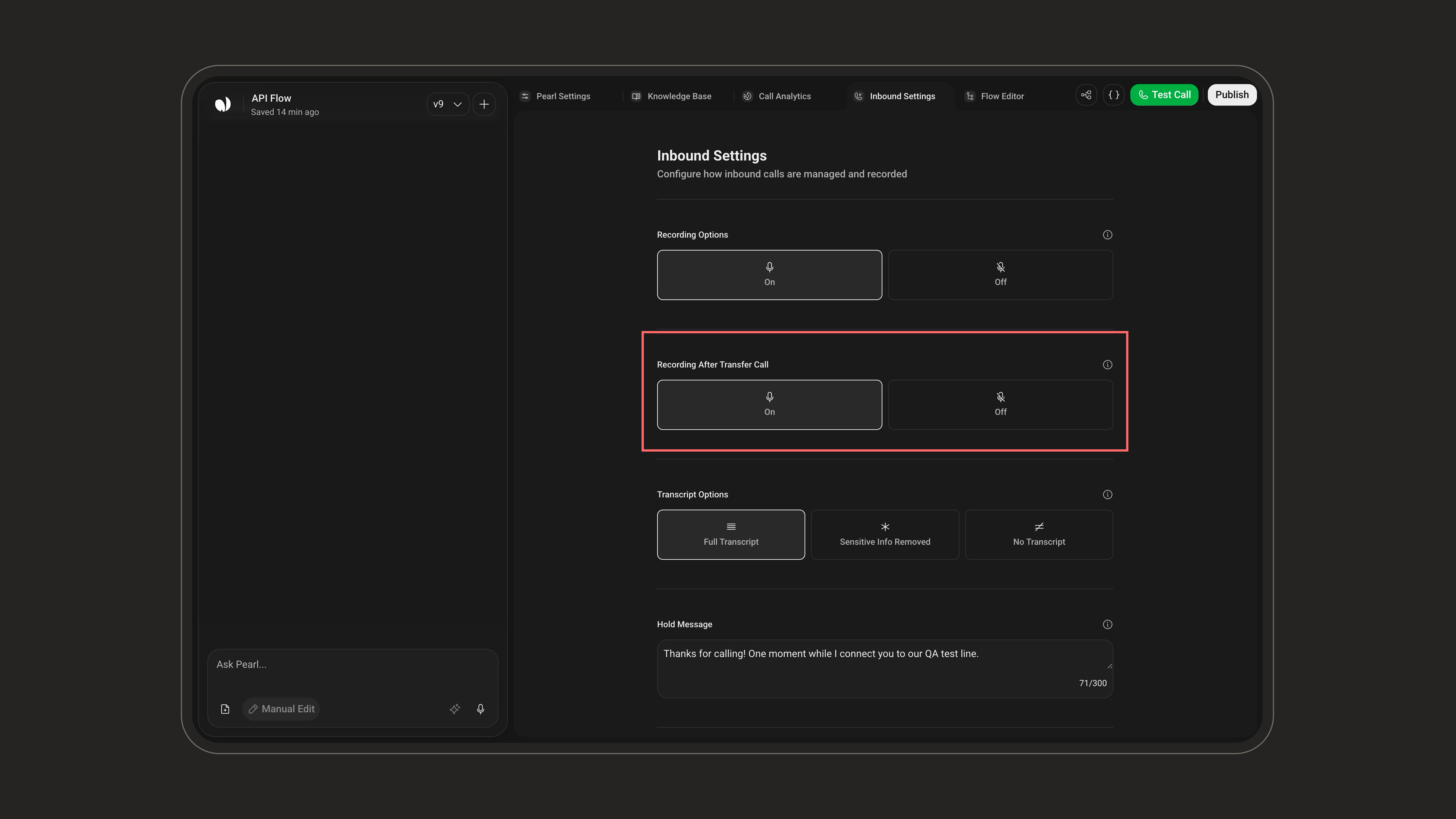
This option only appears when Recording Options is enabled. See the Transfer Call Node to learn how call transfers work.
Transcript Options
Choose what is kept from the call transcript. Transcripts appear in your call logs alongside the recording.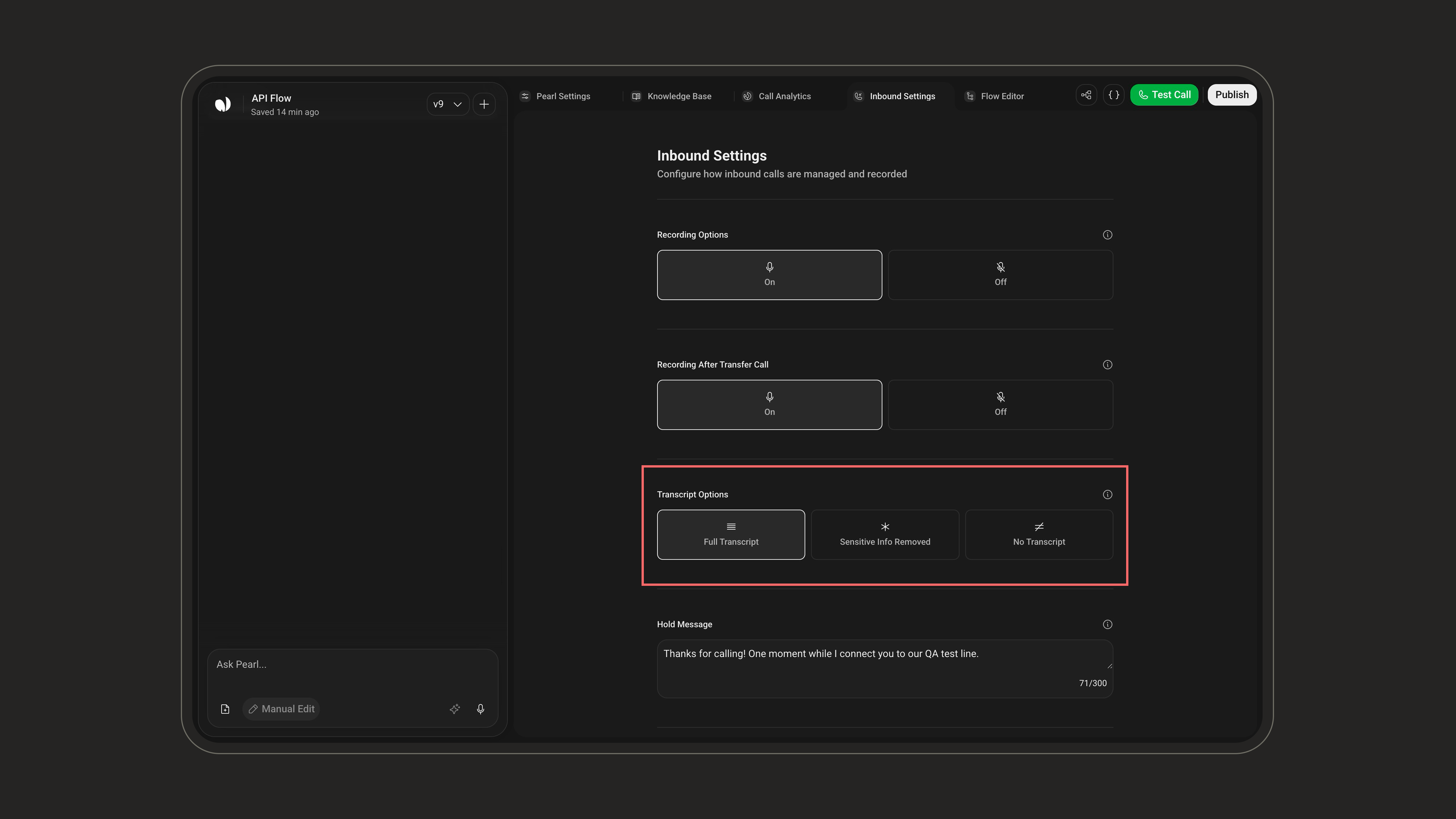
With Sensitive Info Removed, if a customer says “My credit card number is 1234-5678-9012-3456”, the transcript stores it as “My credit card number is ****-3456”, so you can review interactions safely without exposing sensitive data.
Hold Message
Played to callers when they are put on hold, typically when all agents are busy and the caller enters the holding line. English only, max 300 characters.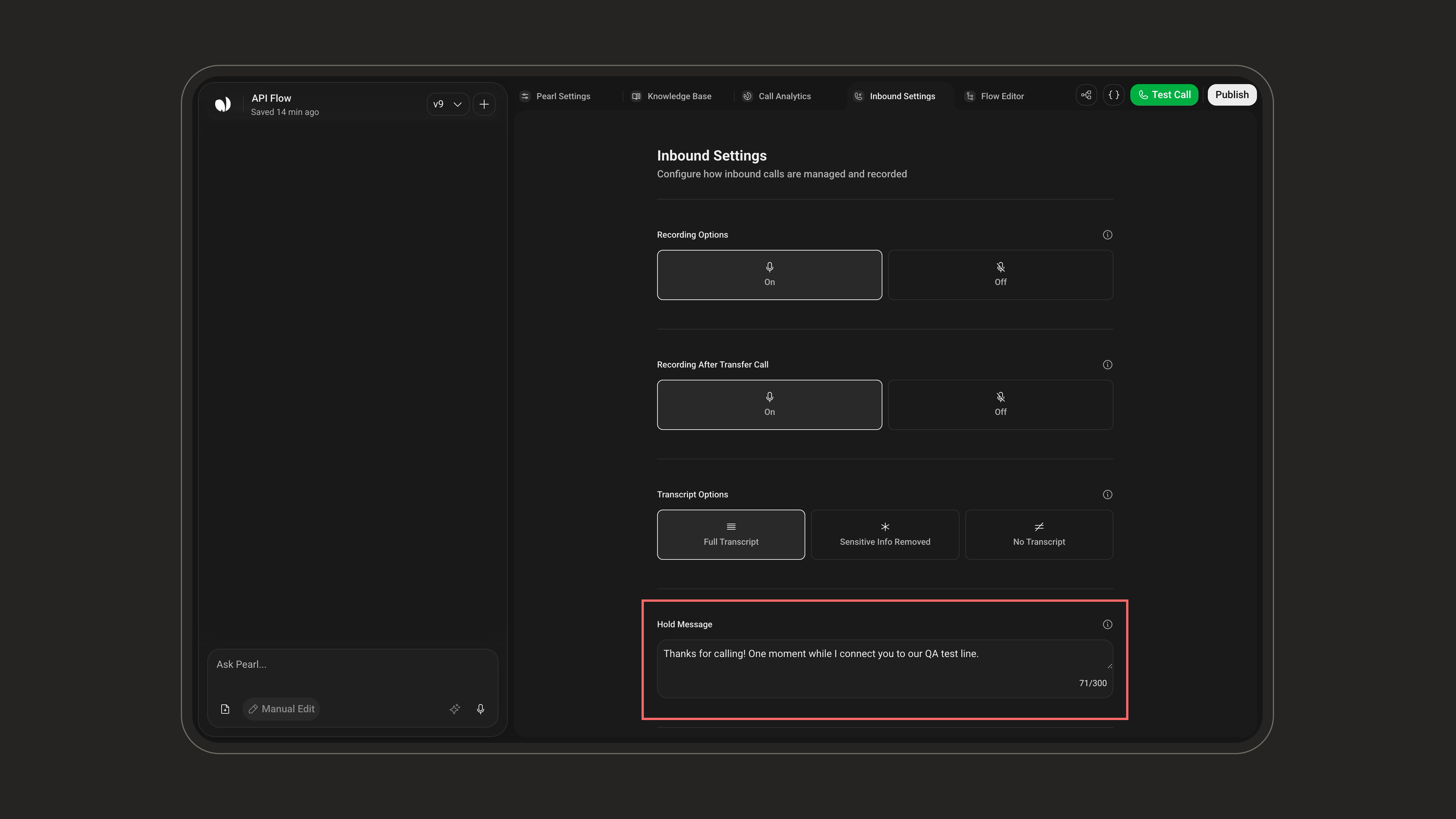
Example: “Thanks for calling! One moment while I connect you to our team.”
If your Pearl experiences high call volumes, callers are not turned away. They enter the holding line and hear your hold message and sound until an agent becomes available.
Estimated Wait Time
When enabled (on/off), callers on hold hear their position in the queue and an estimated wait time, along with your hold message. Setting expectations this way helps reduce hang-ups during busy periods.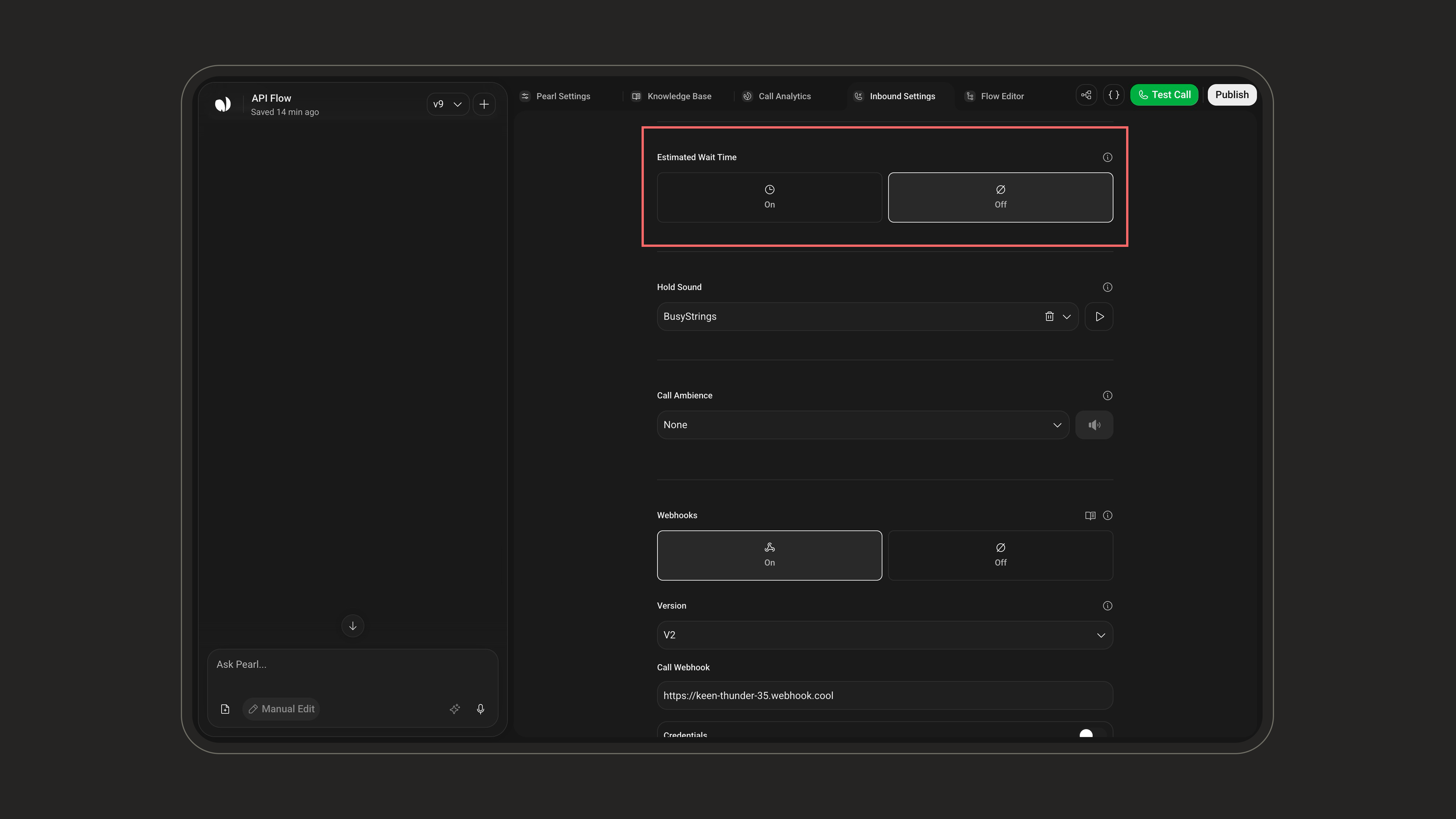
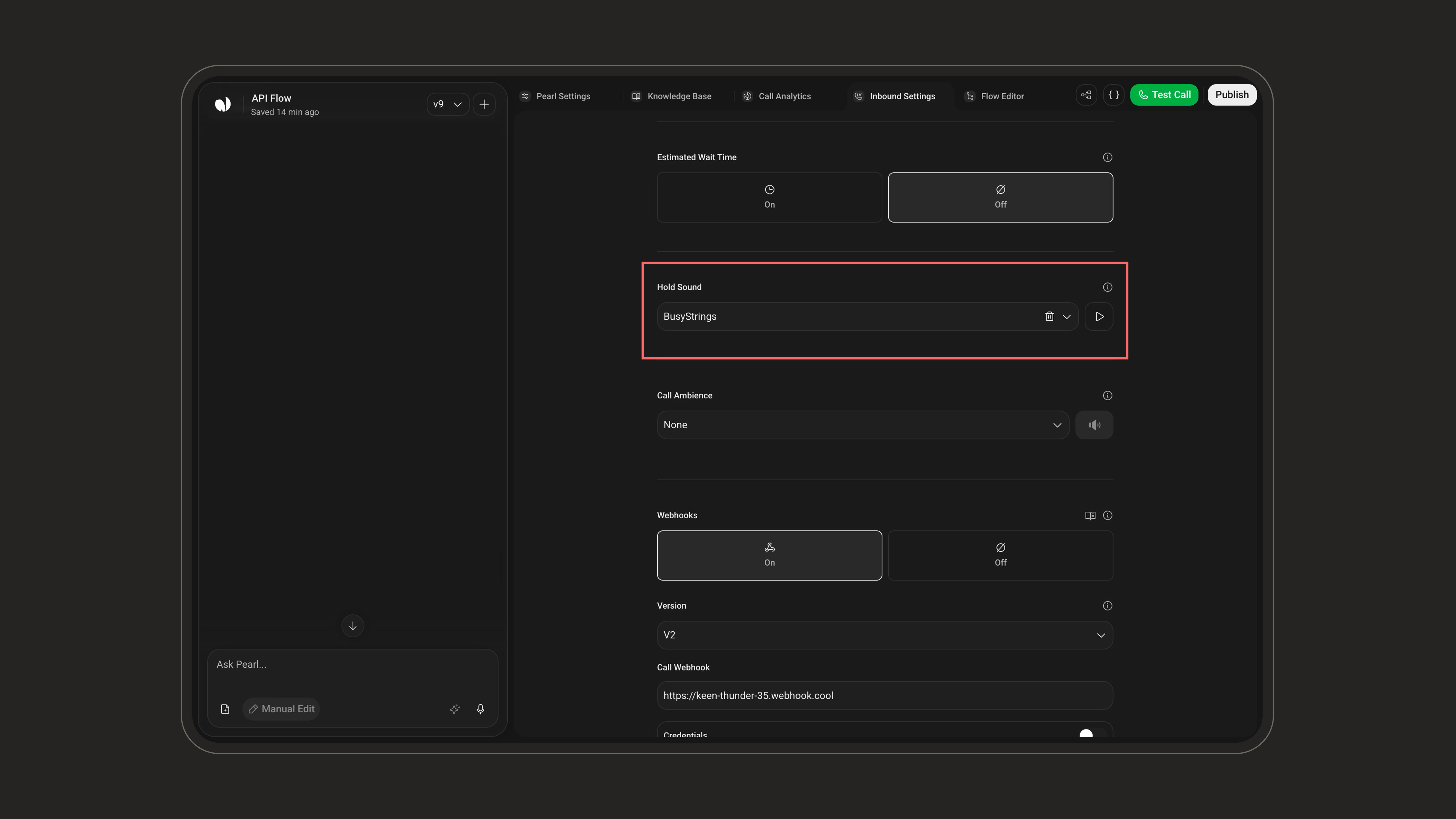
Hold Sound
The music that loops while callers wait in the holding line. Select one of the built-in tracks or upload your own.mp3 (up to 3 minutes). Use the preview button to listen before saving.
Call Ambience
A subtle background environment (office, call center, outdoor…) played during the live conversation to make the call sound more natural and human. Defaults to None. Pick an ambience from the dropdown, then fine-tune its volume (0–100) with the slider. A preview plays automatically so you can hear the result before saving.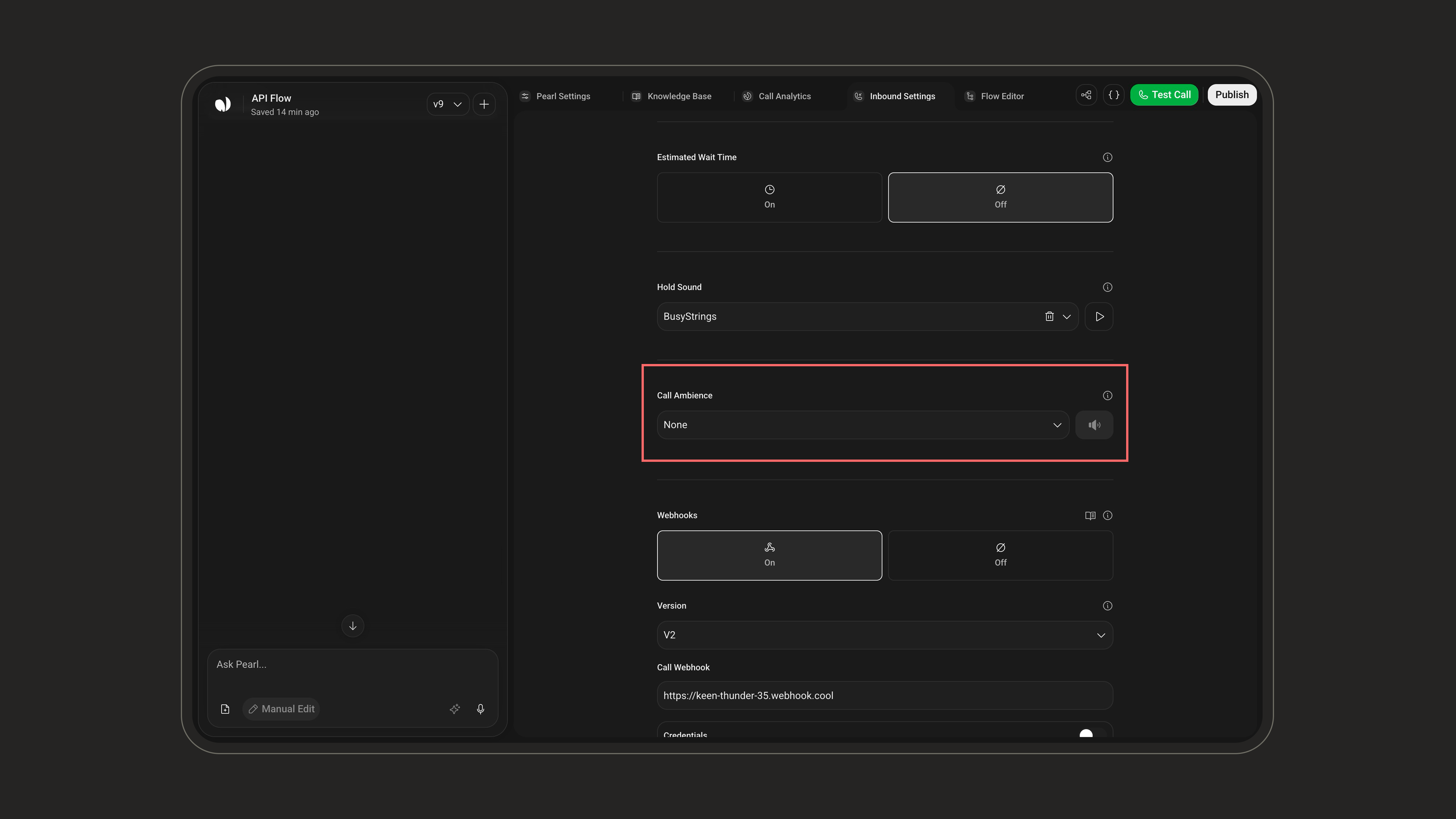
Don’t confuse this with Hold Sound: Call Ambience plays quietly behind Pearl’s voice during the call, while Hold Sound only plays while a caller is waiting in the holding line.
Webhooks
Send call lifecycle events to an external endpoint.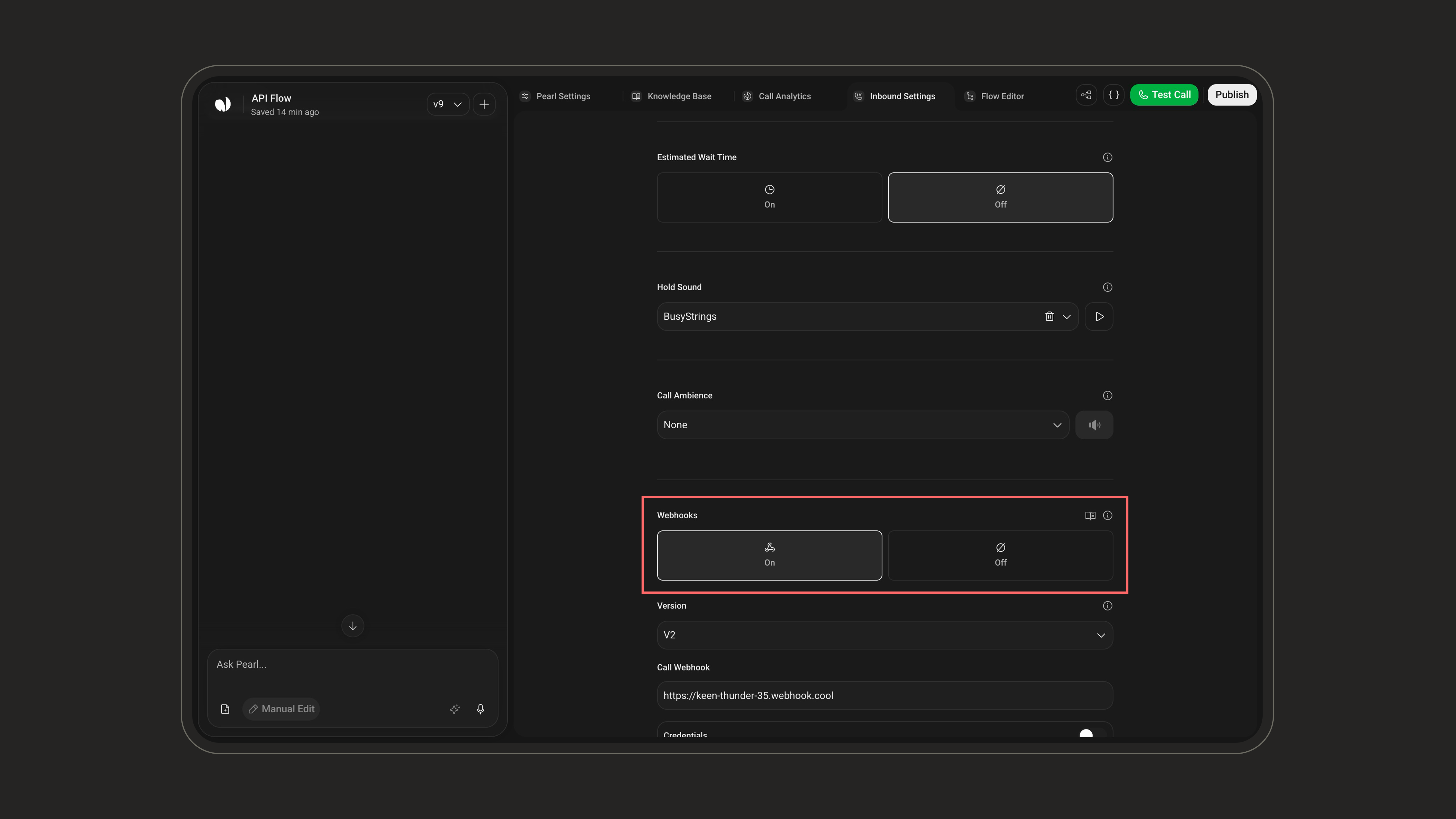
- Version:
V1orV2(default V2). V2 is the current payload format; keep V1 only if you have an older integration built against it. - Call Webhook URL: fires at key points in the call lifecycle (when the call starts and when it ends), sending an object similar to the Get Calls Endpoint with details like duration, outcome, and any data collected during the call.
- Credentials: optional authentication token attached to the requests so your endpoint can verify they come from NLPearl.
If your endpoint is behind a firewall, allow the NLPearl IP addresses listed in IP Whitelisting.
Webhooks
Learn how to configure webhooks, authenticate requests, and handle the events NLPearl sends.
Project-Level Settings
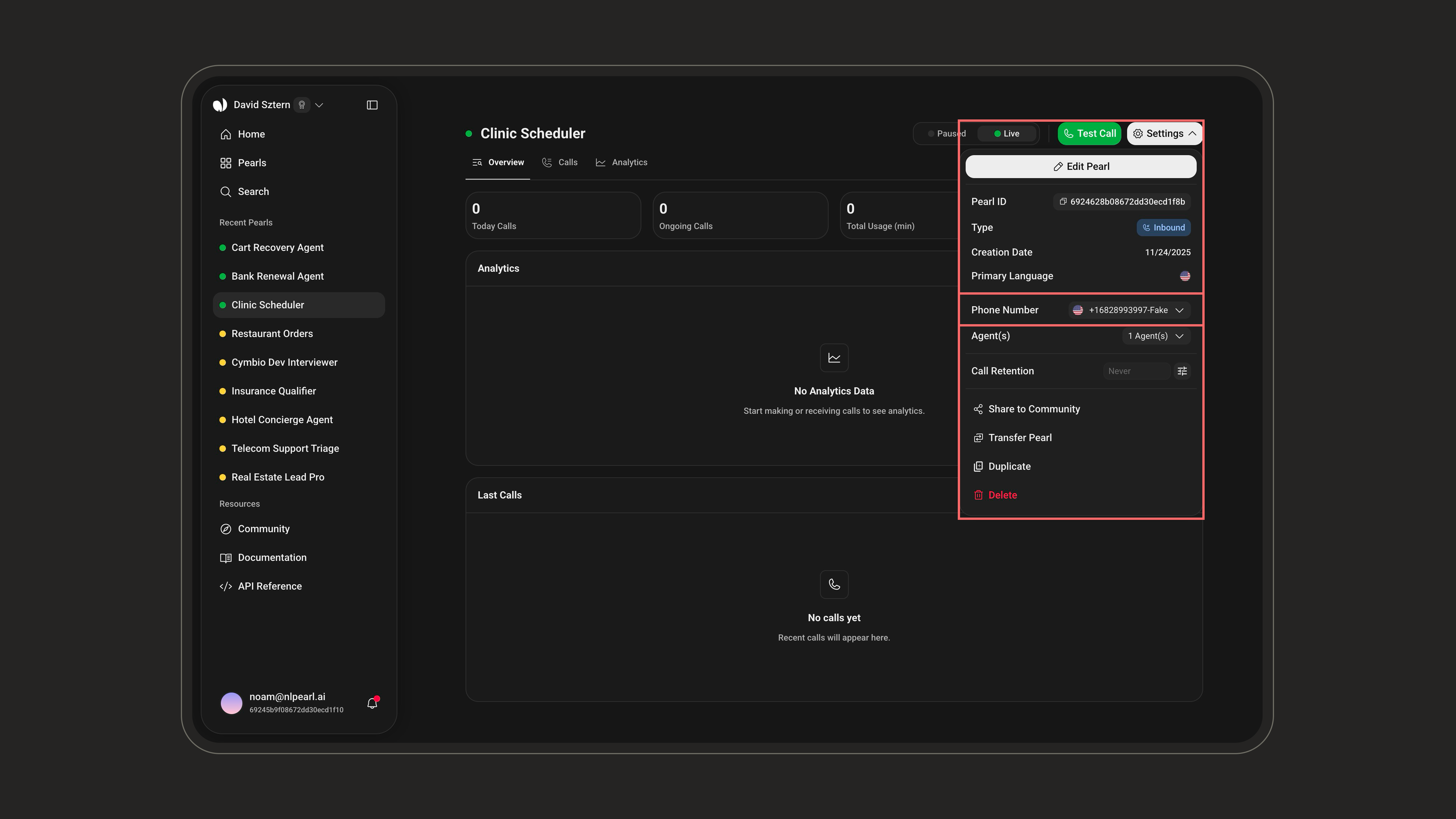
A few settings live at the Project level rather than in the Inbound Settings screen. Open them from the settings popover on your Pearl.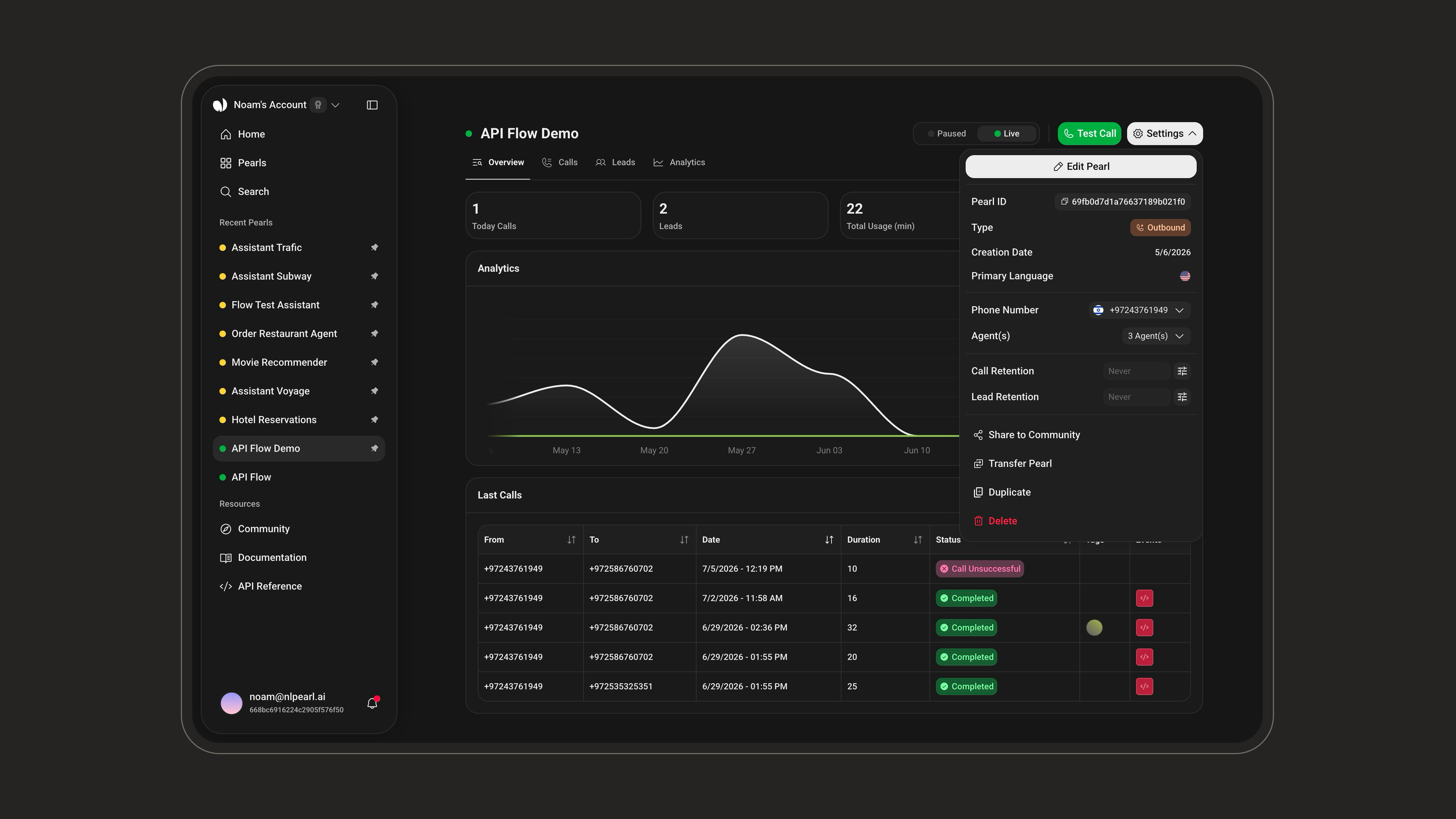
Agents
Sets how many simultaneous agents handle this Pearl’s incoming calls, i.e. how many calls can be answered at the same time, capped by your account’s agent quota. A higher number lets your Pearl take more concurrent callers before the rest enter the holding line.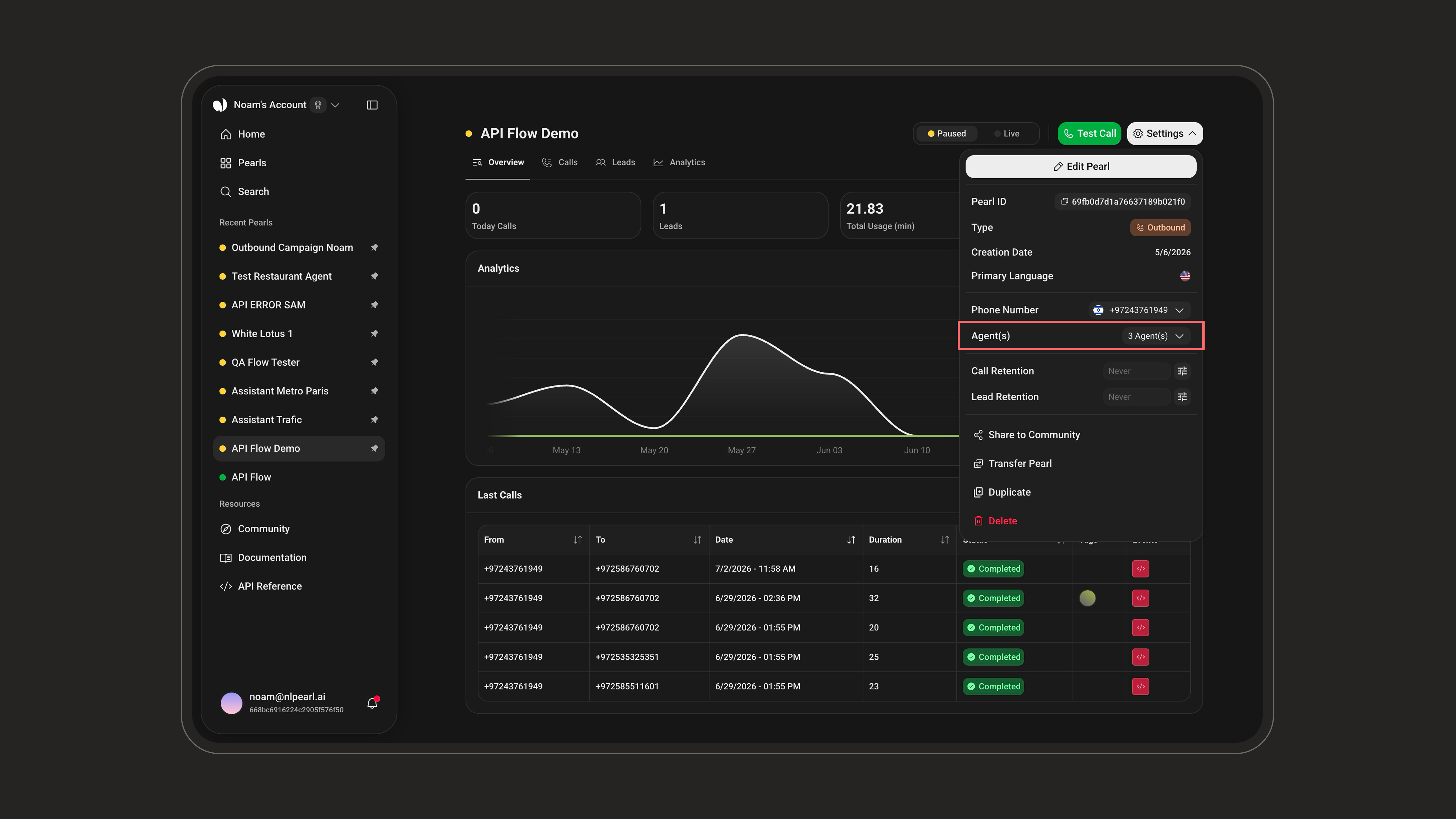
Agents
Learn how to manage the agents assigned to your inbound and outbound activities.
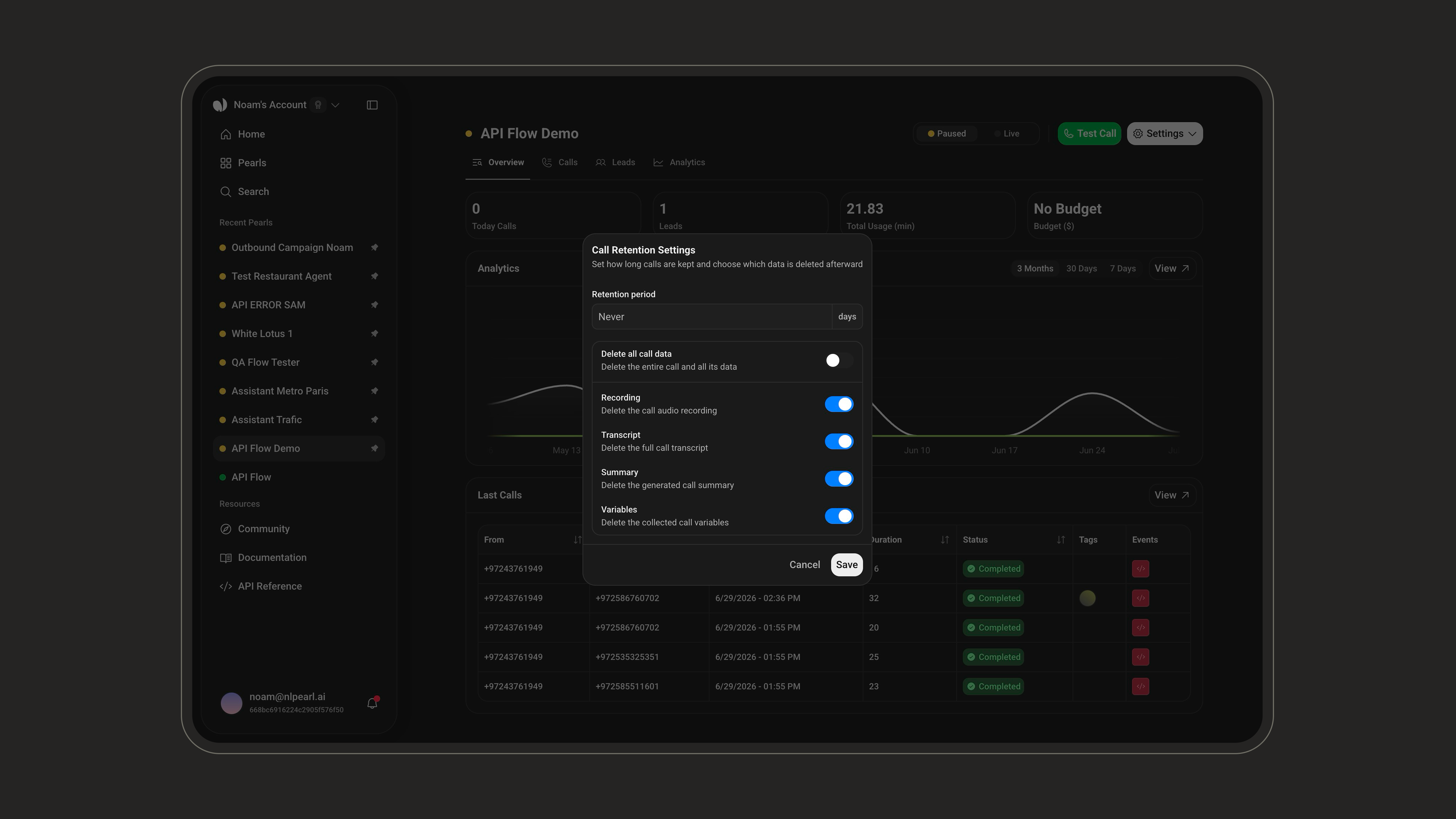
Call Retention
Applies to all calls. Set how long calls are kept (a number of days, or leave empty to keep them indefinitely), then choose what is removed when they expire: delete all call data, or granularly the Recording, Transcript, Summary, or collected Variables.