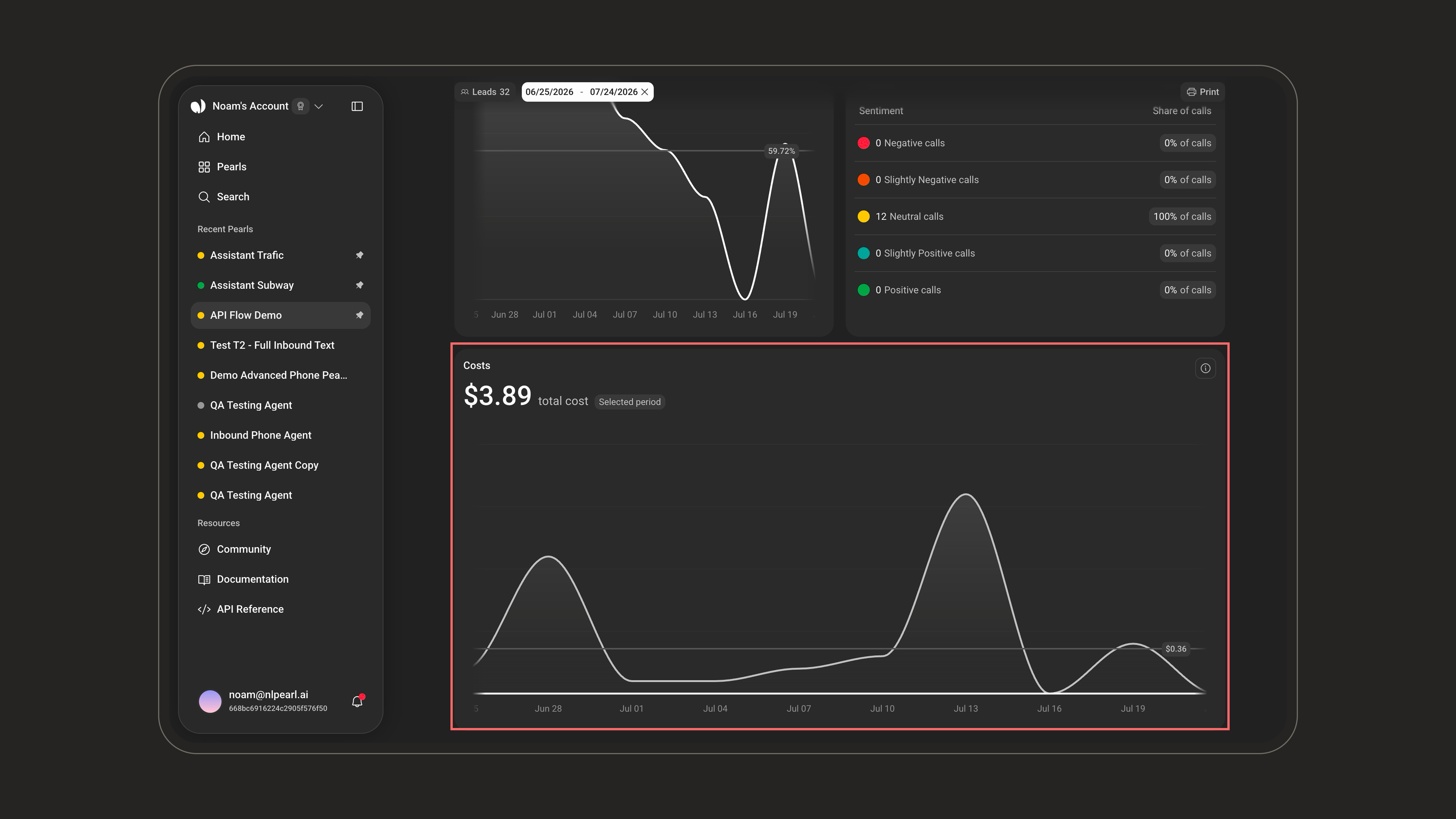


NLPearl gives you a detailed analytics dashboard for every campaign, so you can track performance, understand what Pearl is doing on your calls, and optimize your strategy as results come in.
How this dashboard works
Outbound campaigns (initiated by Pearl) surface more data, while inbound campaigns show a lighter set of insights. Every metric reflects Pearl’s automated voice interactions, never human agents.Most cards follow the same layout: a headline metric at the top, a Selected period tag confirming the number matches the range you picked, and an info button (ⓘ) with a short explanation. Cards that include a chart plot that metric across the selected period.
Running a Pearl Text agent? The same dashboard adapts its wording to chats — Chat Status Breakdown, Average Chat Duration, Chats Heatmap, and so on.
The analytics toolbar
A toolbar sits at the top of the dashboard. Use it to set the time range for every card and to export a report.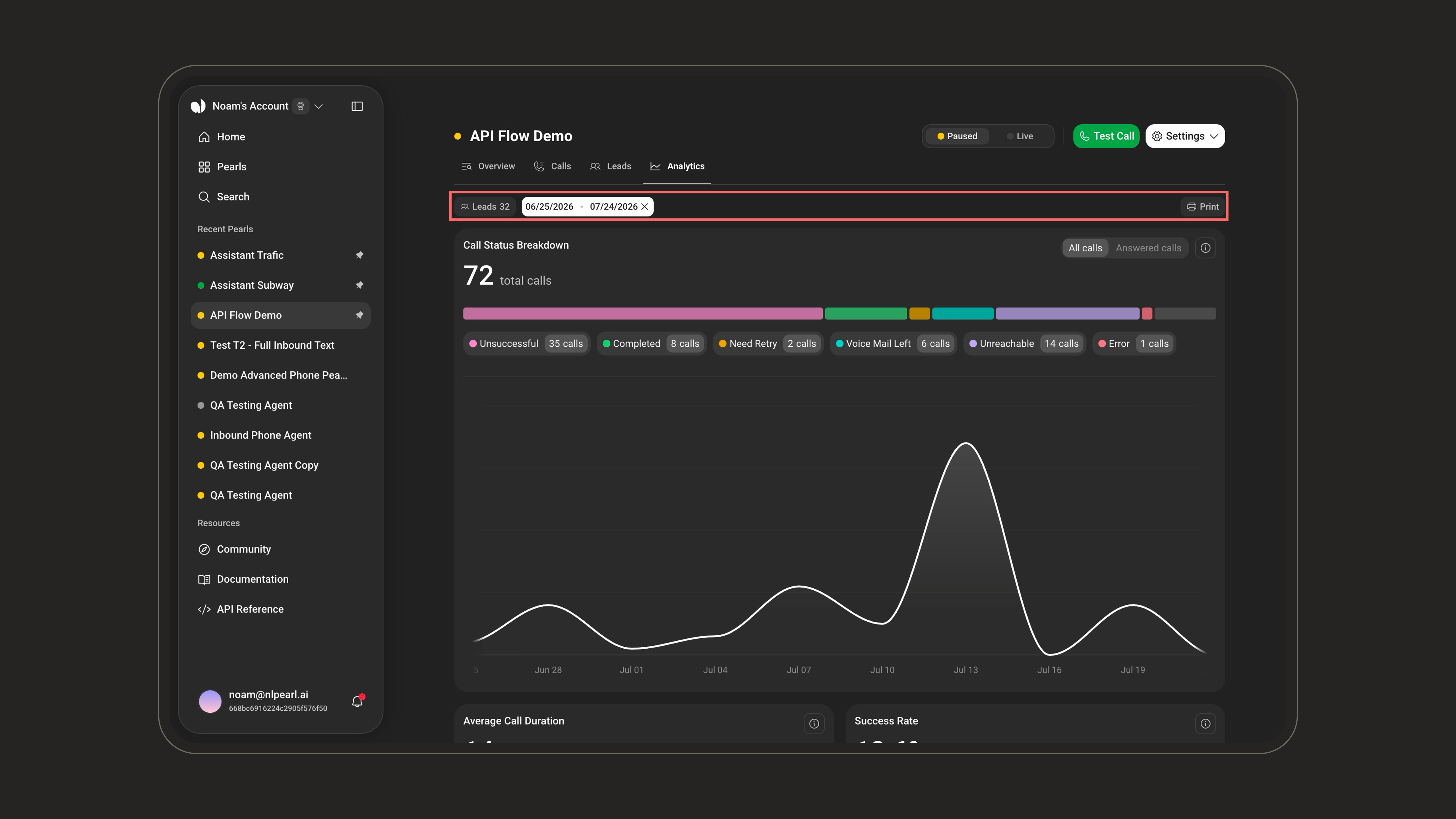
The toolbar: active leads, date range, and the Print button.
Choose your time range
By default the dashboard shows the last 30 days. Open the date picker to jump to a preset —Today, Yesterday, Last 7 days, This week, This month — or set a custom Start and End date. Every card updates to match.
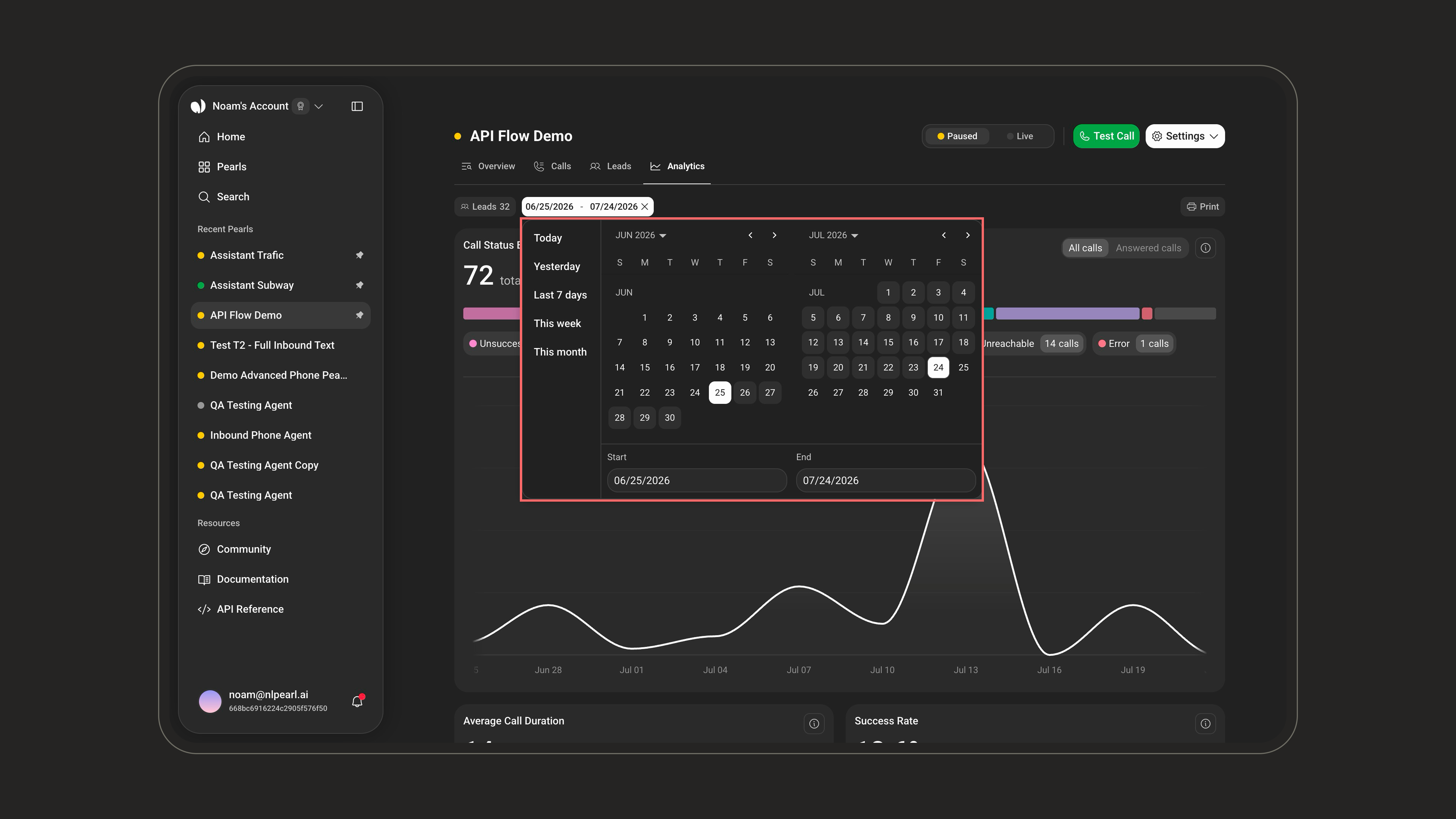
Presets and a custom start/end range.
Export a report
Click Print to turn the current view into a shareable report.1
Set your time range
Pick the period you want the report to cover.
2
Click Print
The button sits in the top-right of the toolbar.
3
Save as PDF
In your browser’s print dialog, choose Save as PDF (or send it to a printer).
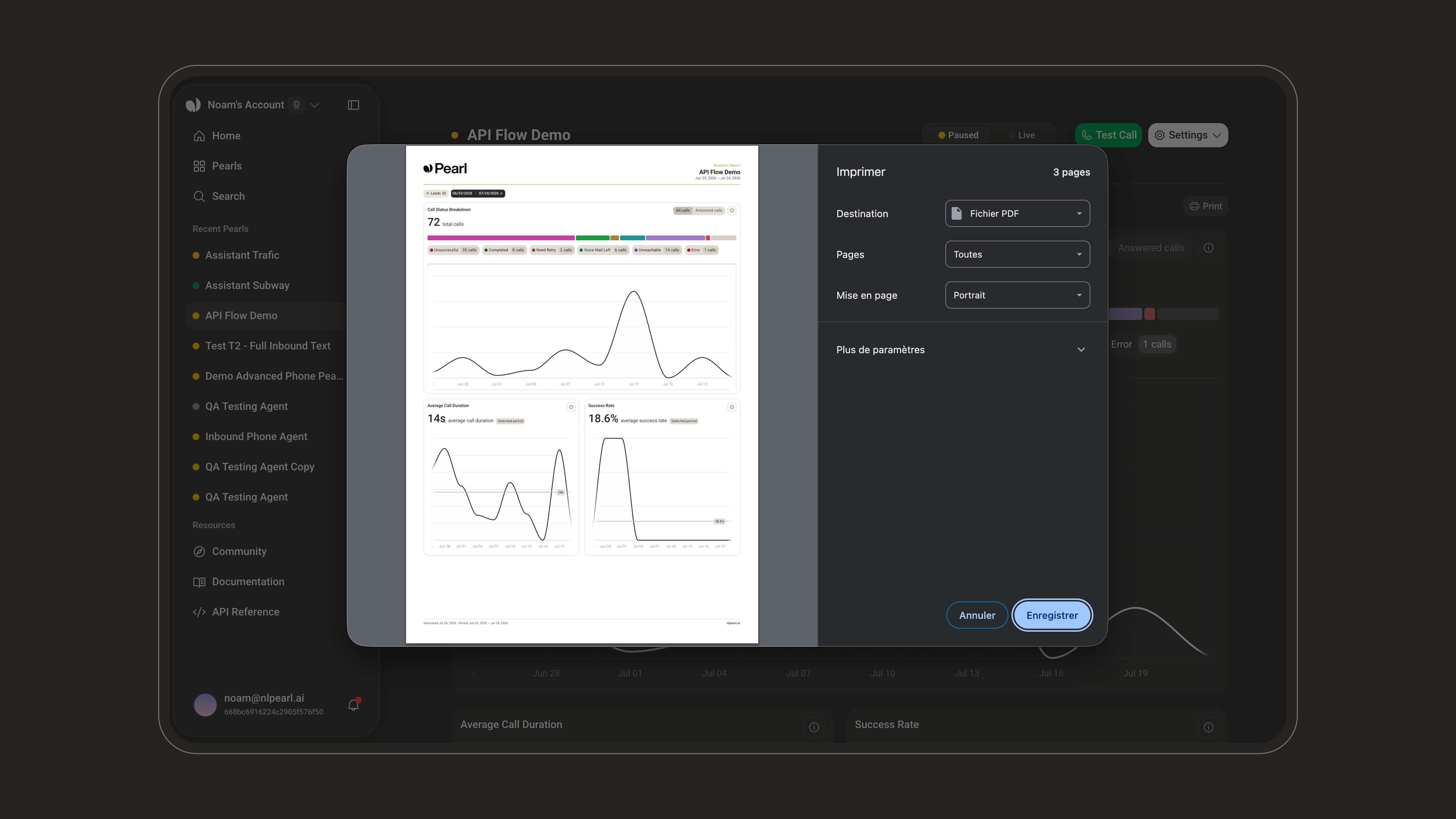
Your browser's print dialog, with a preview of the formatted report — pick Save as PDF.
Call Status Breakdown
This card shows how your calls are distributed across their final statuses. The headline is your total number of calls for the period.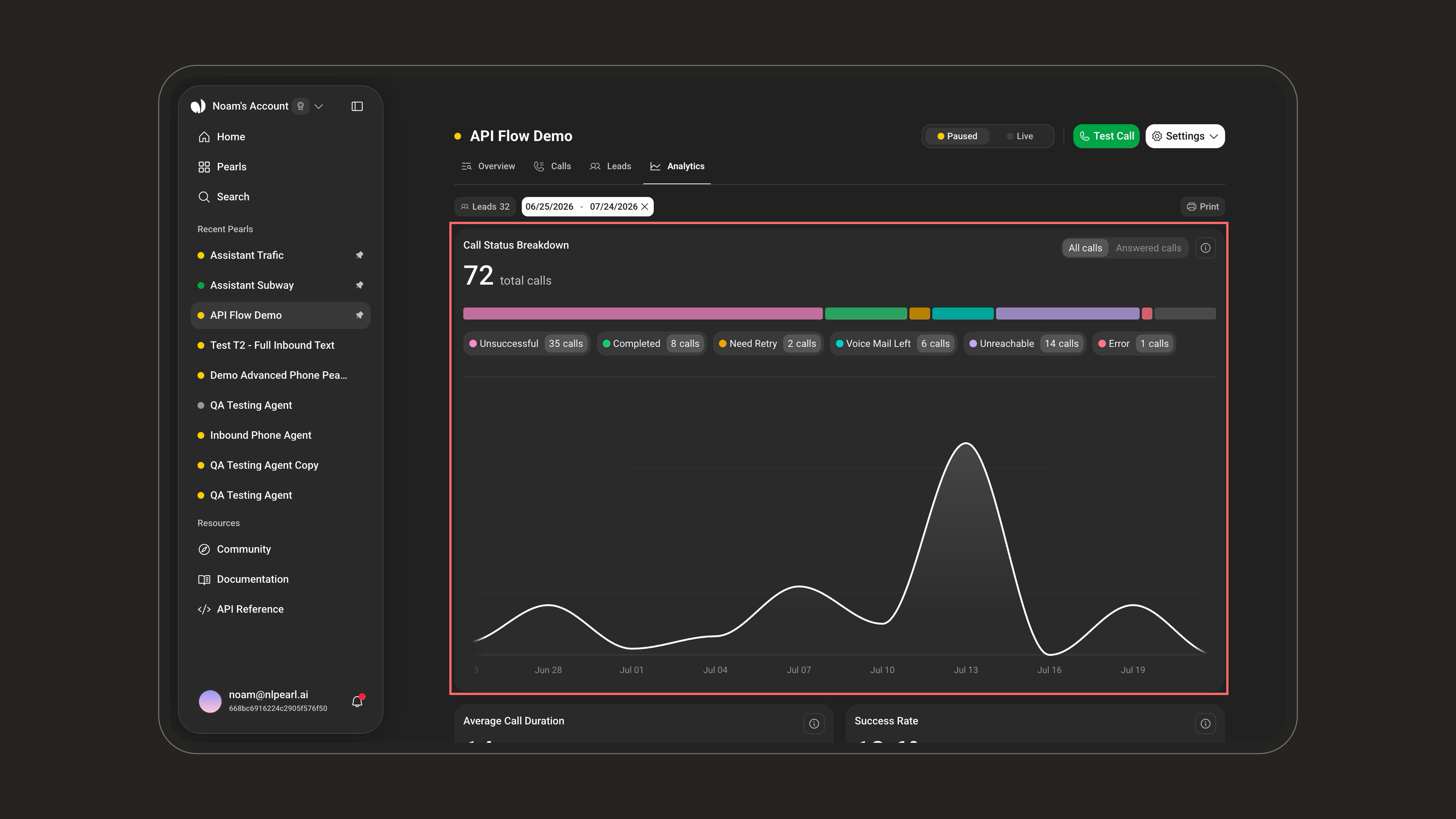
The Call Status Breakdown card.
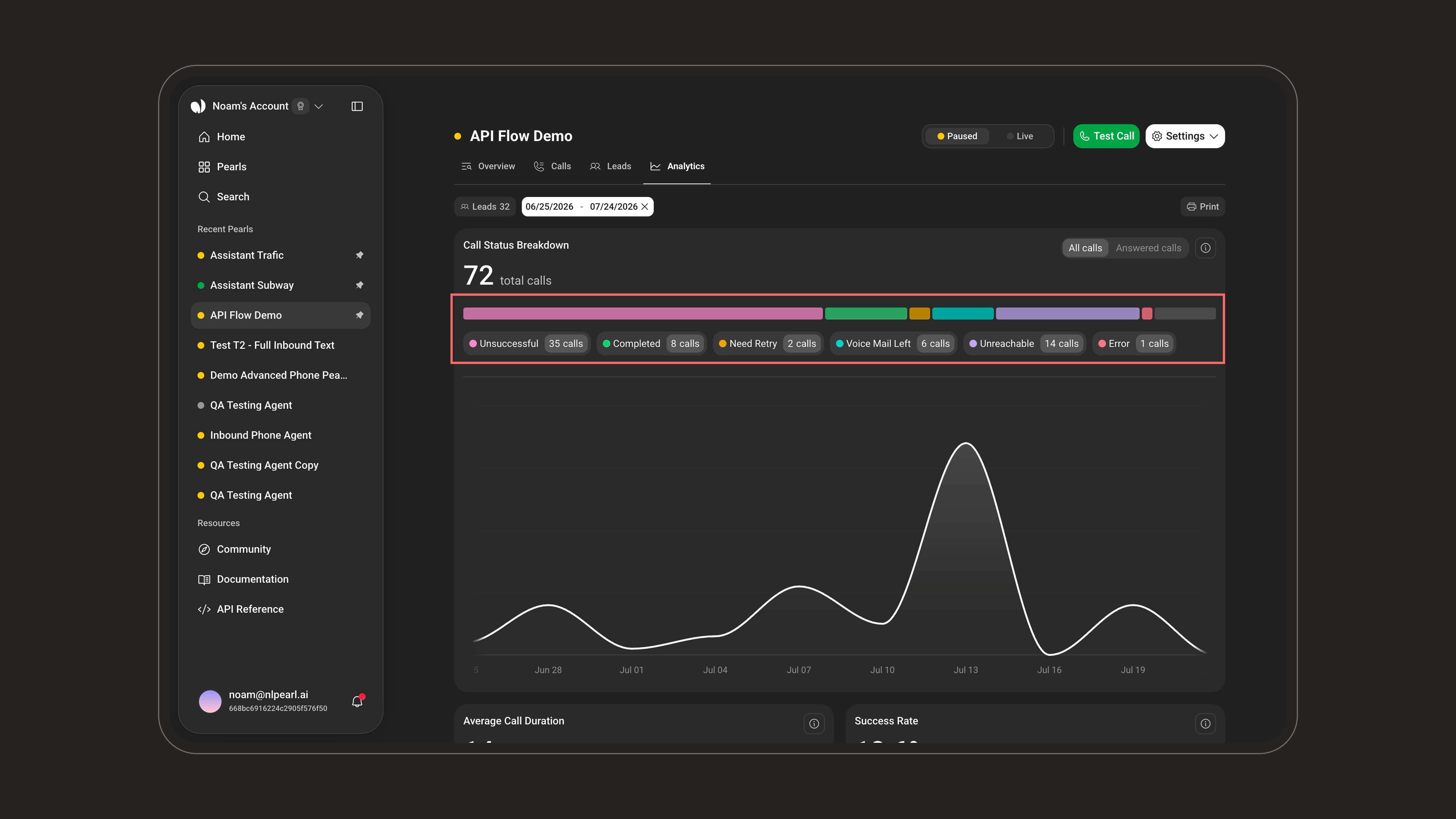
Segment width equals each status's share of total calls.
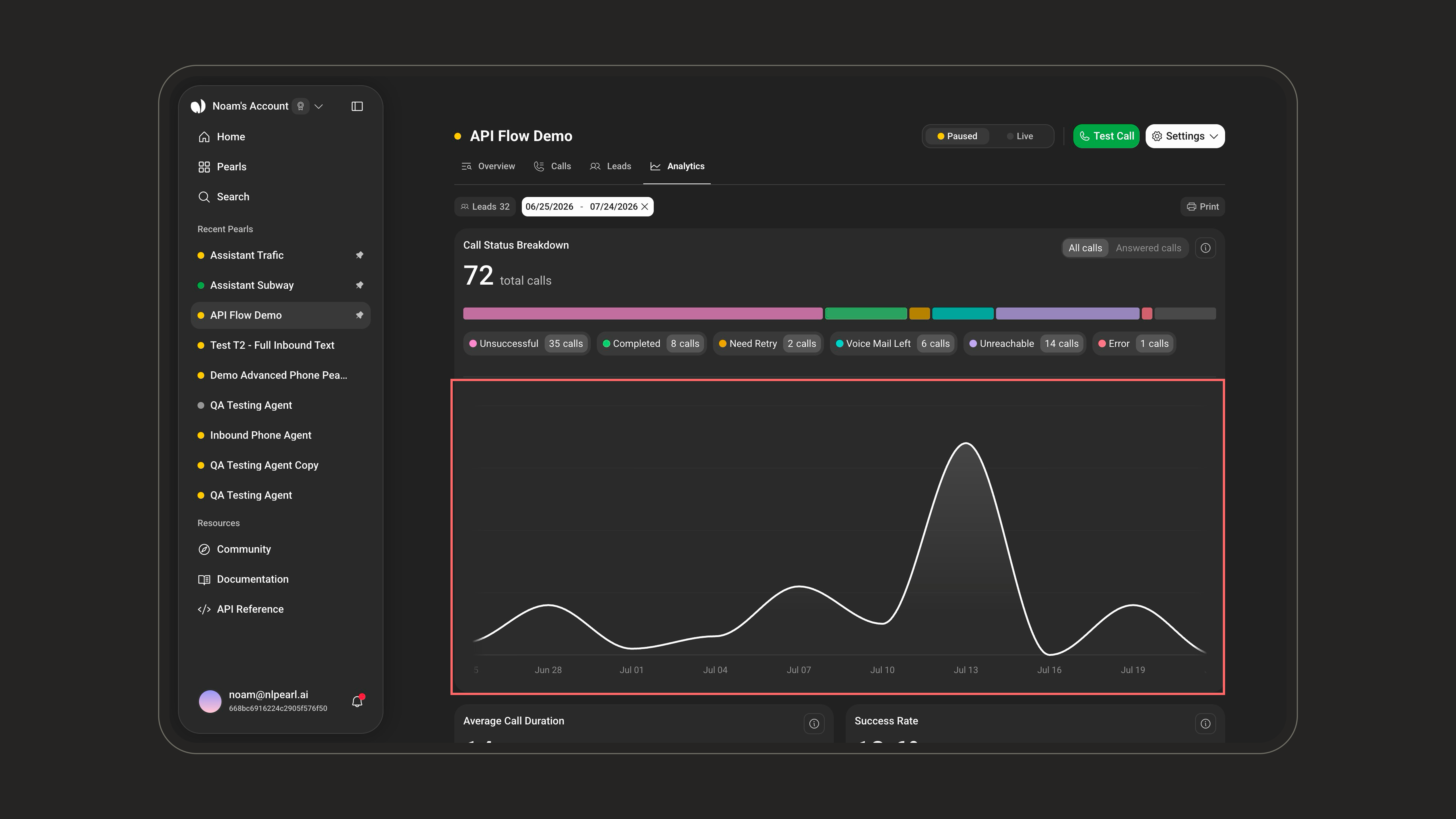
Selected statuses appear as trends over the period.
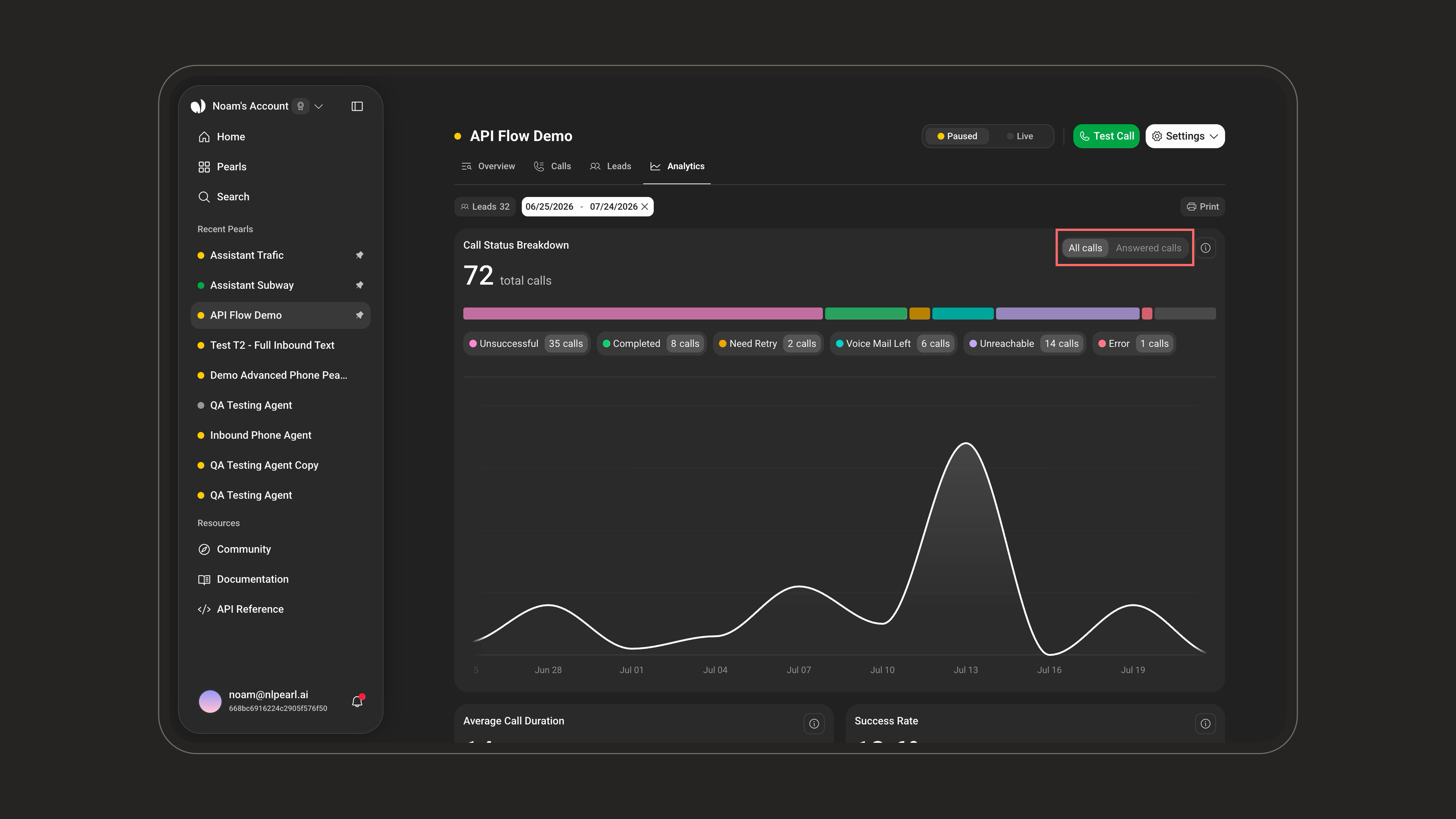
Switch between all calls and answered calls.
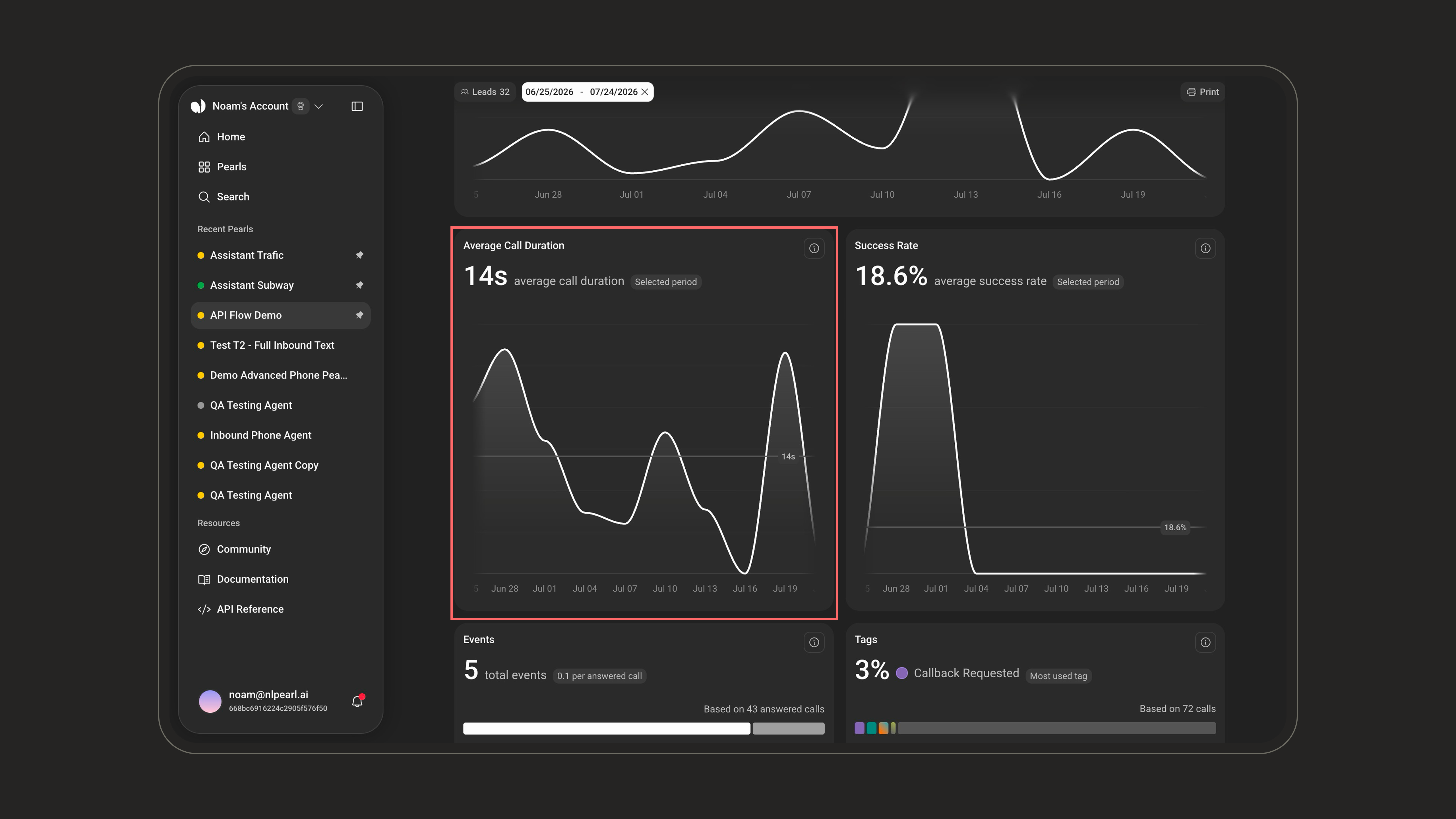
Average Call Duration
The average length of your calls, measured from the moment the person picks up or starts interacting with Pearl. Useful to:- Detect drop-offs
- Monitor engagement quality
- Measure attention span
Success Rate
The percentage of calls that met the success definition you set for your Pearl — booking a meeting, confirming information, or anything else you defined as a success. The headline is your average success rate over the selected period, weighted by call volume.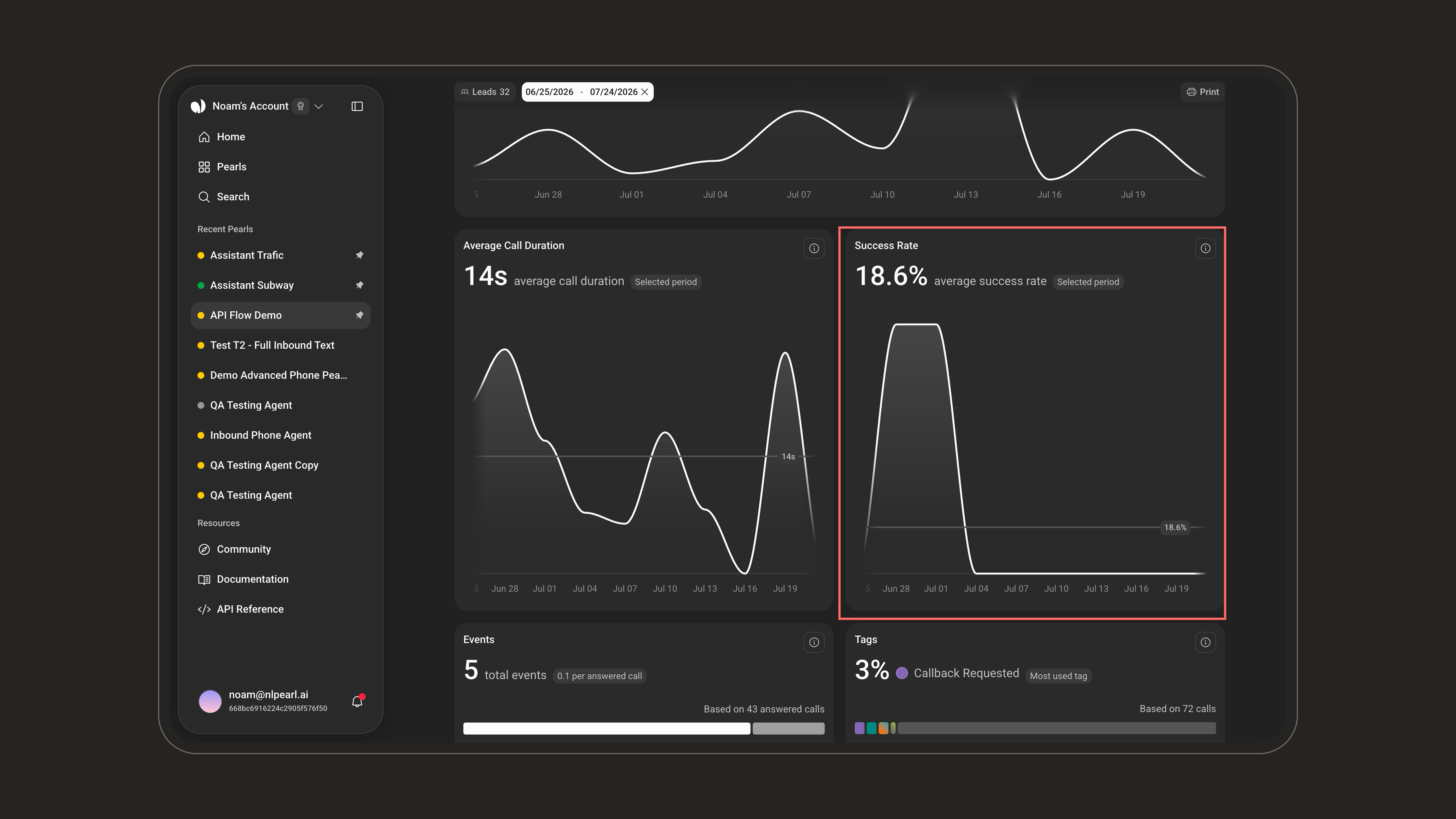
The chart stays empty until you define what success means for your Pearl.
Events
Events are the actions Pearl took during conversations. The headline shows the total number of events and the average per answered call.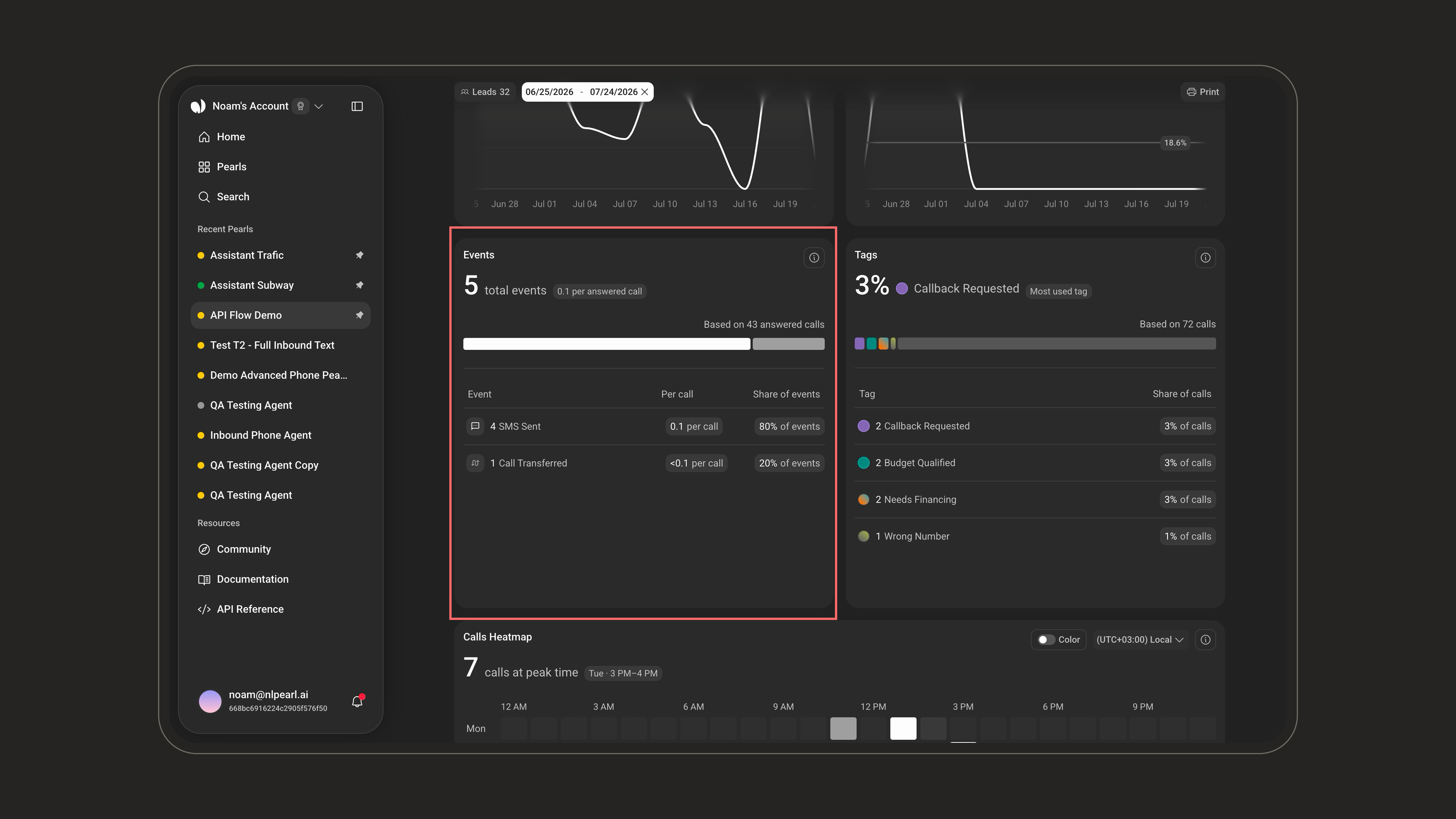
- Count — how many times it occurred.
- Per call — the average number of times per answered call.
- Share of events — its portion of all events triggered.
- Message Taken
- SMS Sent
- Call Transferred
- Calendar Booked
- Email Sent
Tags
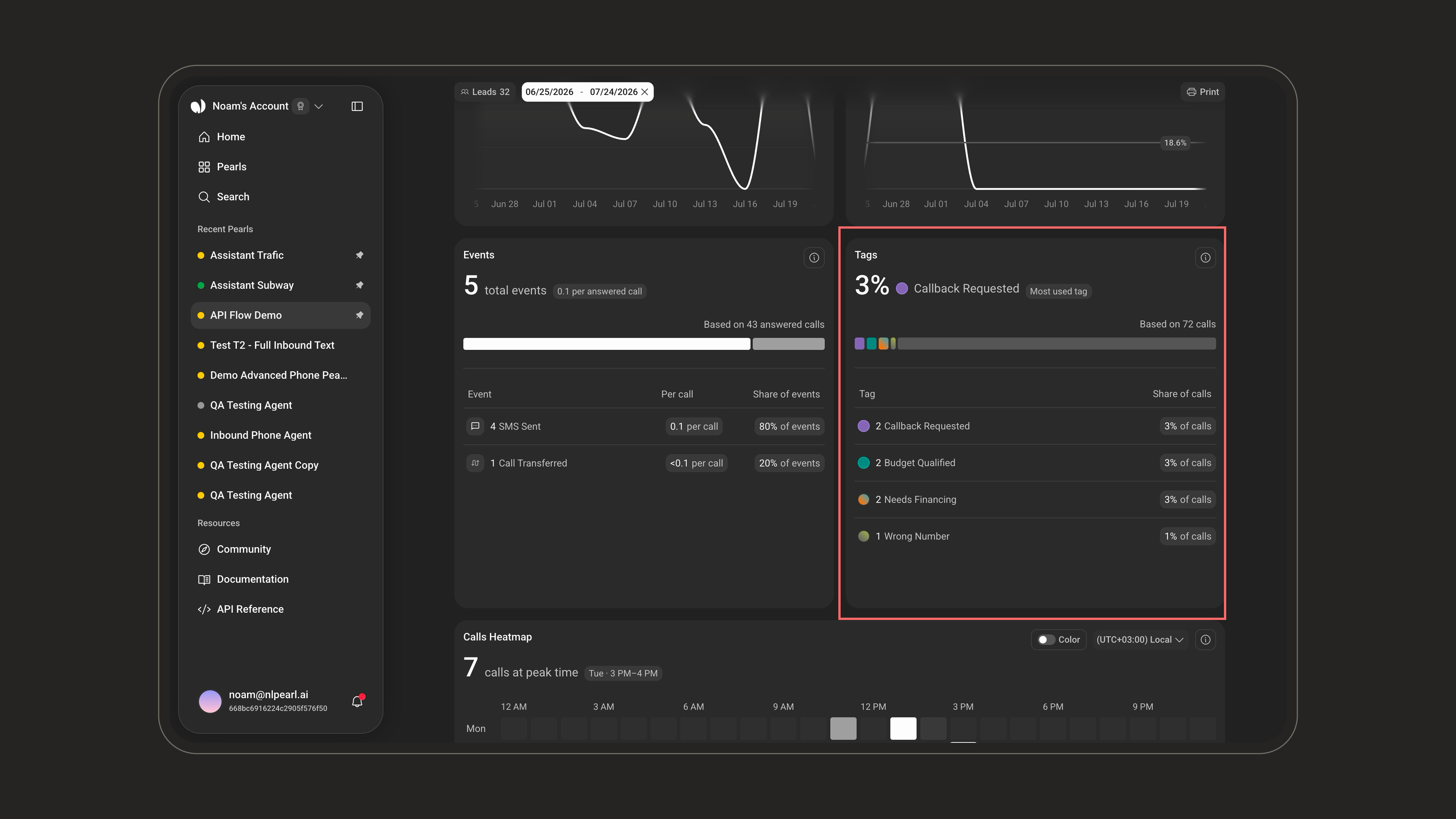
Tags are the Indicator Tags you defined when creating your Pearl — labels likeInterested, Callback Requested, or Wrong Number that Pearl applies automatically based on how each conversation goes. The headline highlights your most-used tag and its share of calls.
Tags aren’t just for display. You can filter campaigns by tag, trigger notifications, and use them to segment leads. Learn how to set them up in Call Analytics — Indicator Tags.
Calls Heatmap
The heatmap shows when calls happen across the week — every cell is a day-and-hour slot, and brighter cells mean more activity. The headline calls out your busiest slot. Use it to find the best times to call (outbound) or to staff for demand (inbound).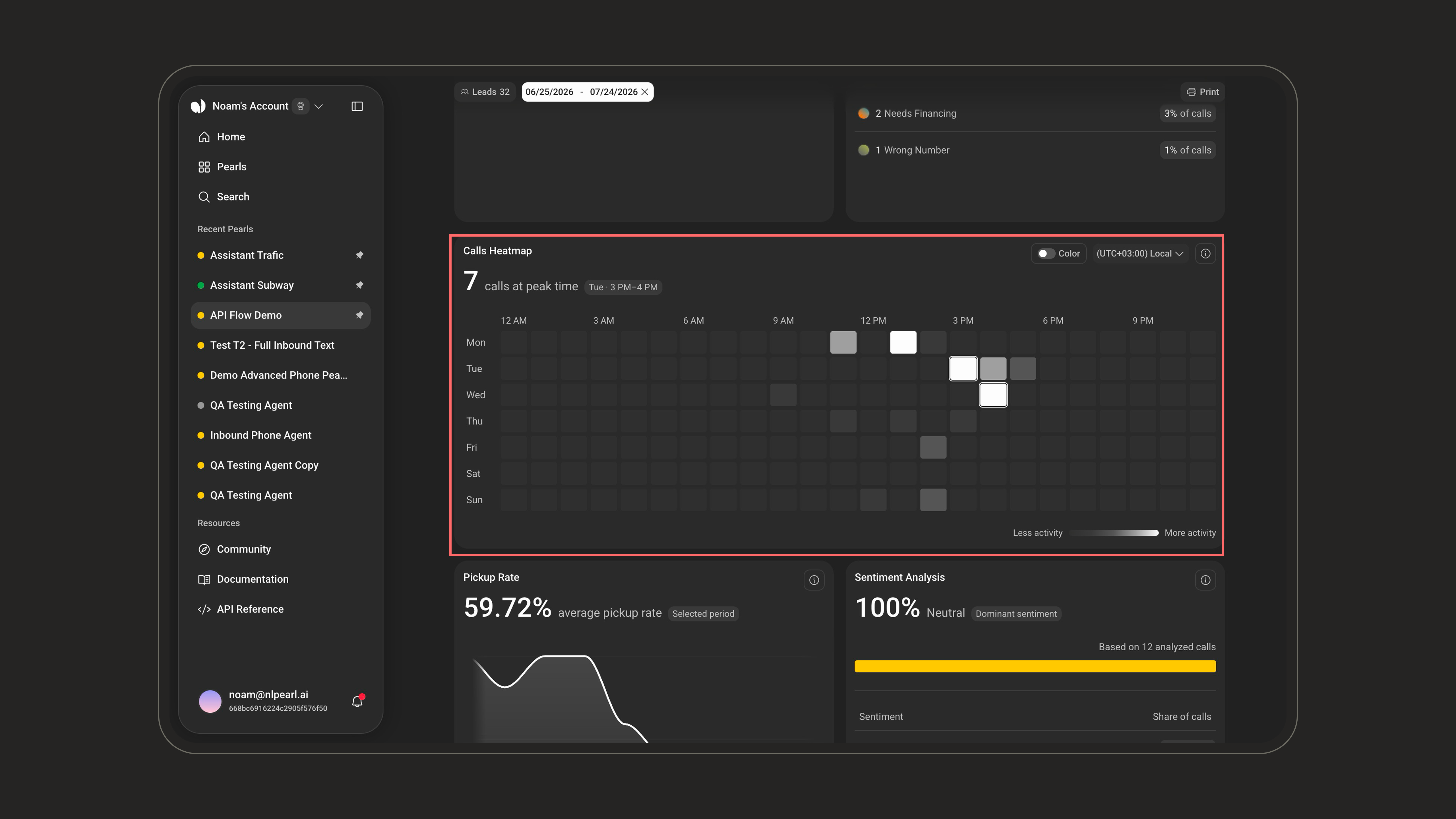
- Color — toggle a color scale on or off.
- Timezone — read the grid in the timezone that matters to you.
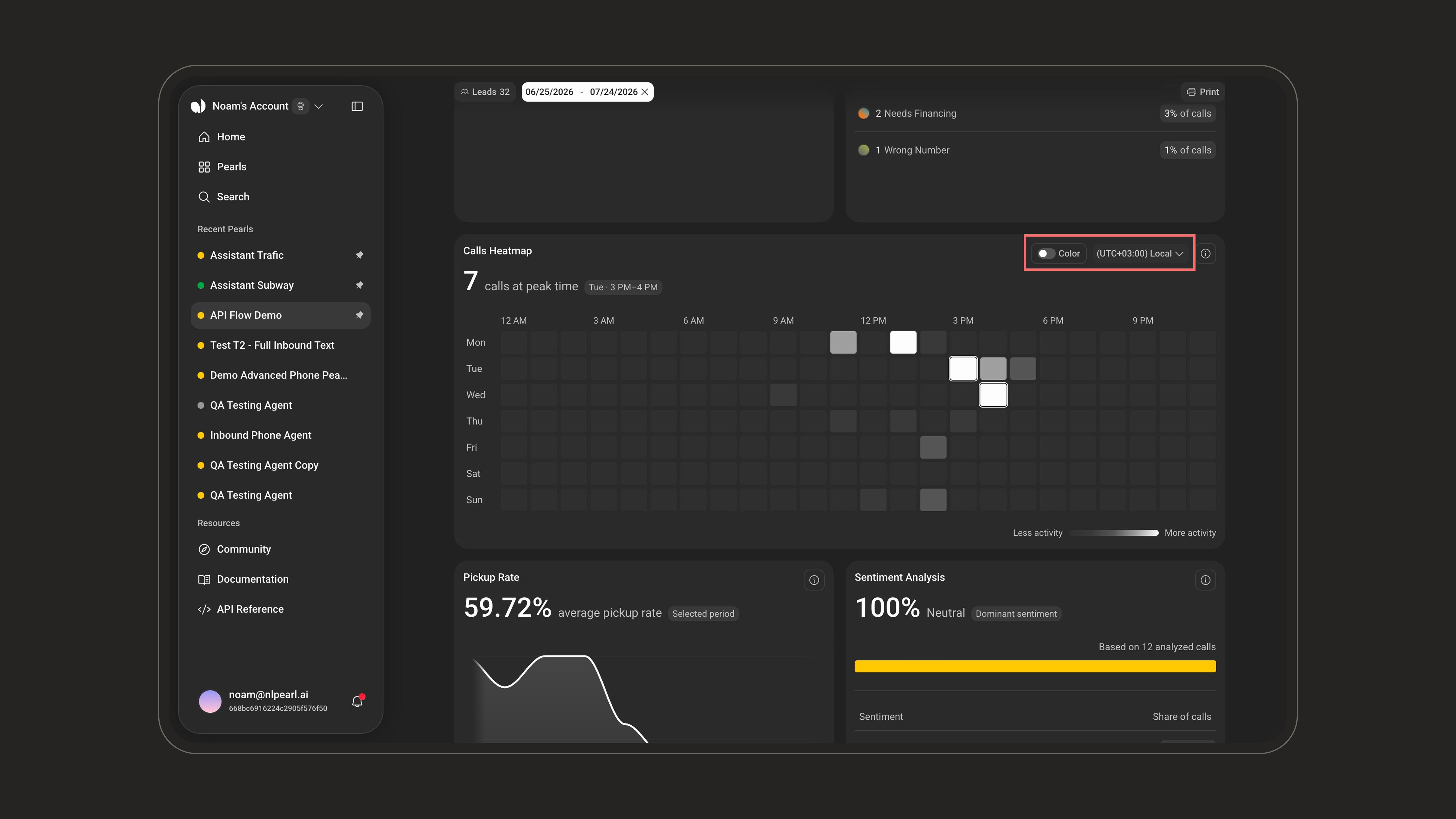
Color toggle and timezone selector.
Pickup Rate
The percentage of outbound calls answered by your contacts. The headline is your average pickup rate for the period. It tells you how reachable your audience is, so you can fine-tune your calling hours.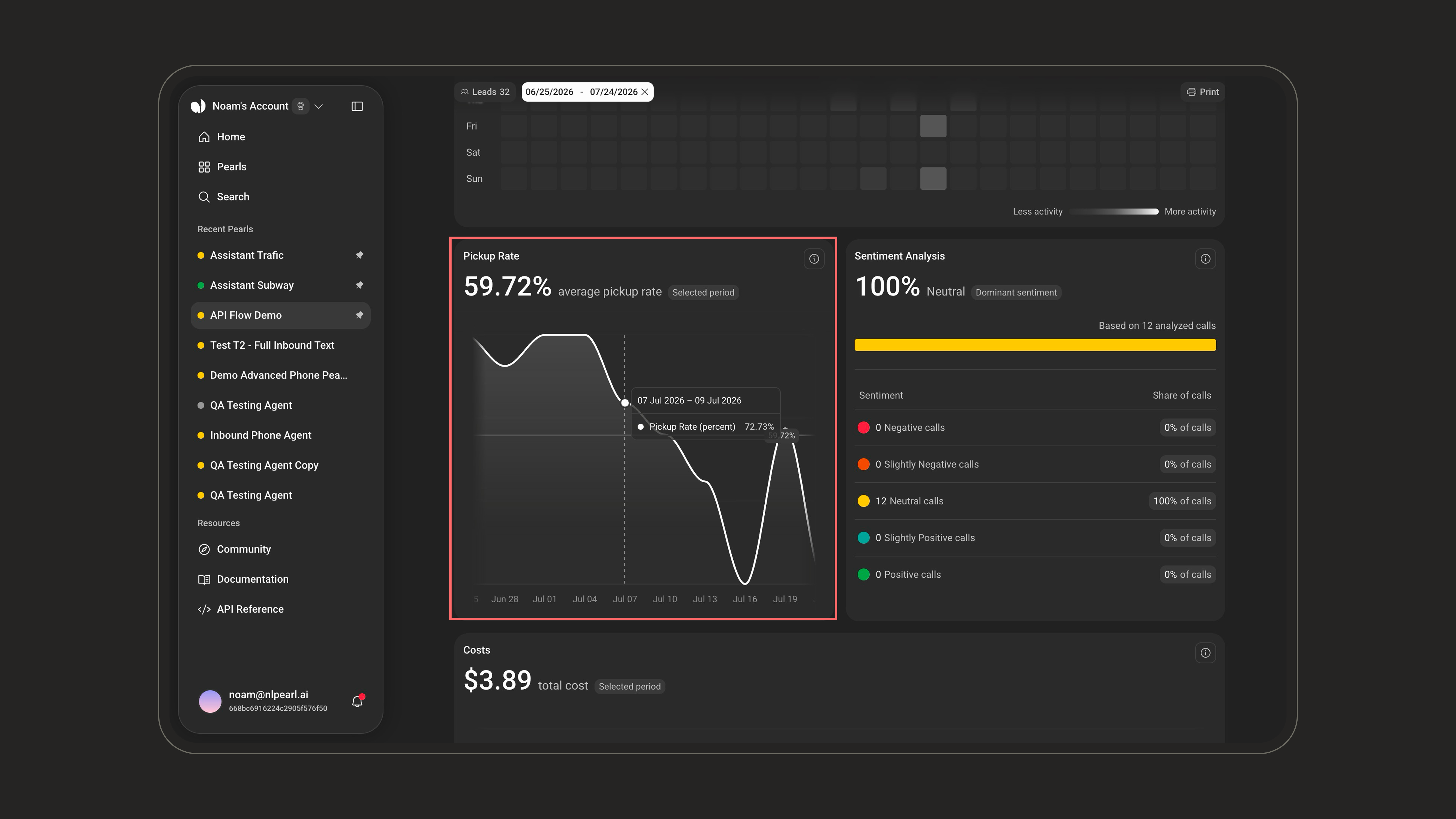
Sentiment Analysis
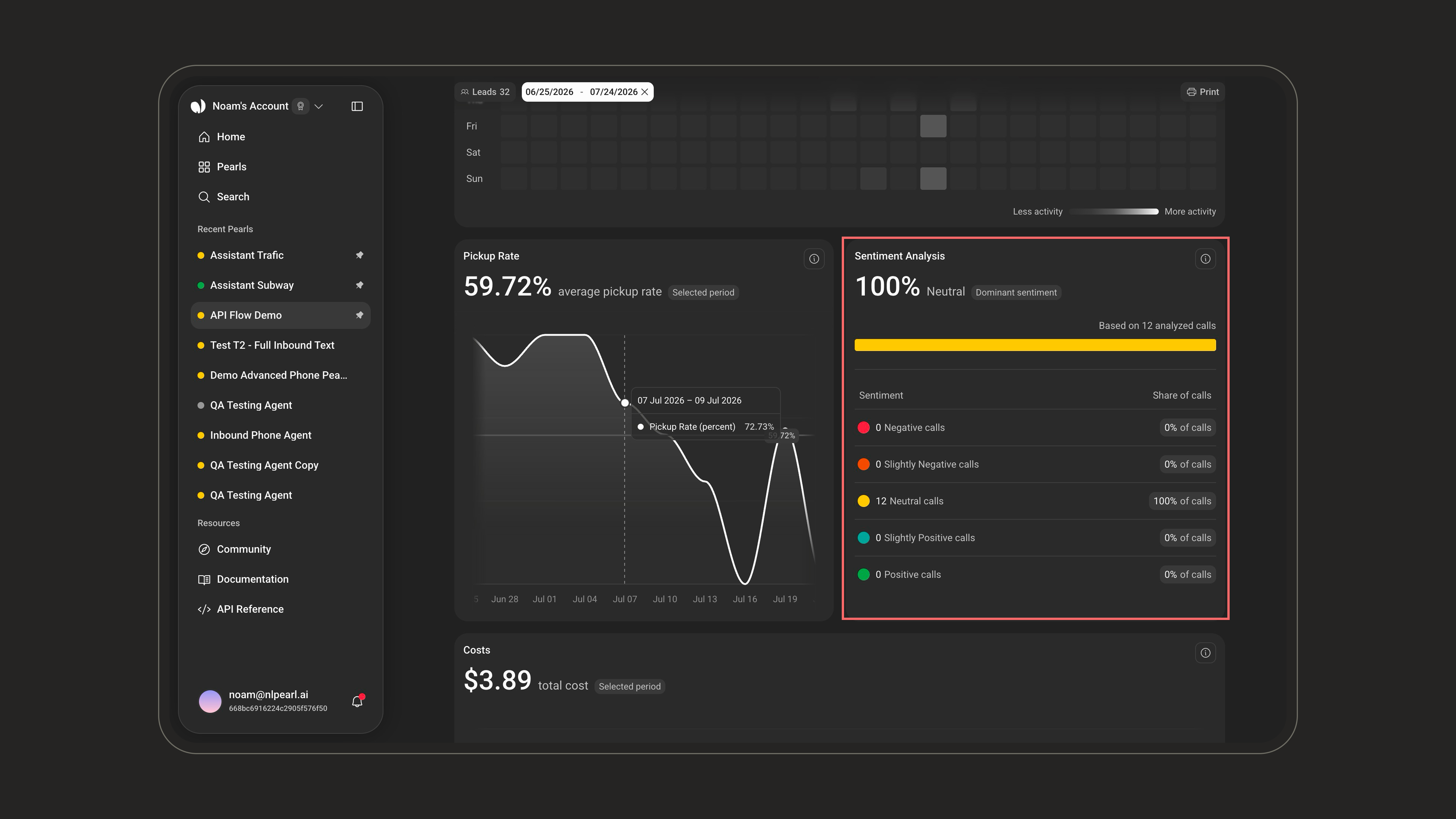
The emotional tone of your conversations, detected from customer responses across five levels. The headline names the dominant sentiment and its share of calls.- Negative
- Slightly Negative
- Neutral
- Slightly Positive
- Positive
Costs
Your total and per-period call costs, with a headline total and a trend over time — so you can see how usage affects your credit.